

What is Love Your Path?
It’s a community driven initiative to help look after our local paths. Auckland is a big city with lots of parks, reserves and, of course, cycle paths to look after. The Council employs contractors to do this, but, due to budget constraints, maintenance is often infrequent, and they can only do so much. Love Your Path is about getting together with like-minded people and doing something about it. It could be trimming overhanging bushes, sweeping up glass, collecting rubbish or planting seedlings. Showing your love and care for your local pathway could even include installing artwork, a little free library, bike skills features or anything to improve the amenity of your neighbourhood. It can be as big or as small as you want to make it.
How did it start?
The shared path from Glen Innes to St Johns Road (a section of Te Ara Ki Uta Ki Tai) was opened in December 2016. It’s a lovely, wide path that snakes down the hill from St Johns Road, goes alongside the Apirana Reserve and has a lookout part-way down with views to the Tāmaki River and beyond. Prior to opening, it was planted with thousands of dollars’ worth of native trees, harakeke, shrubs and grasses. It looked amazing.
It was maintained for the following couple of years, but over time it became neglected, and the weeds started growing around the native grasses. The weeds were sprayed with weedkiller, which killed the grasses, leaving bare dirt that became infested with weeds again. Gorse, pampas, privet, jasmine, moth plant, kikuyu grass and other noxious weeds became established, and litter built up. One side of the path was dug up and replaced by gravel, then the weeds started poking through that too. Occasional efforts were made to remove litter, contractors sprayed the weeds every now and again, but the once-beautiful path started looking very neglected. Occasionally a local would do some weeding and rubbish collection, but it’s a big area for one or two people to manage.
In 2023, the floods that hit Auckland washed large amounts of gravel onto the path. As the Council had much bigger problems to handle, a few local individuals helped clean up. When it happened again in 2024, some neighbours got a bit more organised, and the beginnings of a small maintenance group was formed, including a few of us from Bike Eastern Suburbs.
After hearing about our mahi, Bike Auckland invited us (Bike Eastern Suburbs) to co-deliver the first Love Your Path event, delivered in June 2024. It was a great success with 20 people turning up. We then turned ‘Love Your Path’ into a regular monthly event with around ten or so people showing up each time for a couple of hours’ work.
Along the way, we learned a lot of lessons, which we’ve shared here. We’re still learning, and we invite you to build on our experience to start something in your neighbourhood.
Benefits of loving your path
Besides the warm glow of making a positive contribution to your neighbourhood, there’s plenty of other benefits, including:
Improved amenity. It’s nicer riding on clean and nicely planted paths.
Improved safety. Cutting back those pesky overhanging bushes that catch your handlebars and improving sight lines helps keep people safer.
Meet your neighbours and fellow cyclists.
Wider community engagement. You’ll probably discover lots of other volunteer groups working nearby, and get to share experiences.
Engagement with Local Board and Council. Doing positive work in the community is a powerful tool, increasing your credibility with politicians.
How to get started
Depending on how you tick, either make a plan or just make it up as you go along. There’s no hard and fast rules.
What do you want to achieve?
It could be anything, from just cleaning out a blocked drain or picking up rubbish to organizing a regular community working bee or planting out some seedlings you have lying around.
How much time and energy do you want to expend?
Small efforts over a long time can achieve big results, but sometimes a big effort is needed to kickstart things. Two people can do twice as much as one. Ask your community for help; it’s easy to get carried away, so make sure you don’t burn out.
What resources do you have?
If you haven’t got stuff, ask the community for it. We’ve had hundreds of seedlings donated to us, and we also had the generous support of the Sunhill Garden Centre who let us borrow garden tools and gave us free coffee. More recently, we were granted support from a local board grant for purchase of gardening tools and a bike trailer so we can now bring all the gear – and remove the weeds and rubbish – by bike!
The Ecomatters ‘Love Your Neighbourhood’ grant may provide a small amount towards your clean up, and your Local Board may provide support for an ongoing Love Your Path clean up series.
How to get help
There’s lots of places you can get help. Council may be able to help supplying rubbish bags and arranging collection. They can deal with the big stuff like chopping trees or jobs that need power equipment. Friends are a good source of labour, and neighbours can lend you tools or give you plants. There’s lots of other volunteer groups you can contact for ideas and advice. Volunteering for them may give you ideas about how you might do things. Schools have environmental groups, and students working towards service awards are often keen to pitch in.
You may have a local Menzshed who can supply pest traps or weta hotels for your path.
Select your path
What needs doing?
As a path user, you will probably know where the problem areas are. Consider places where overhanging bushes narrow the path, bushes block sightlines, things get slippery, rubbish collects and weeds grow.
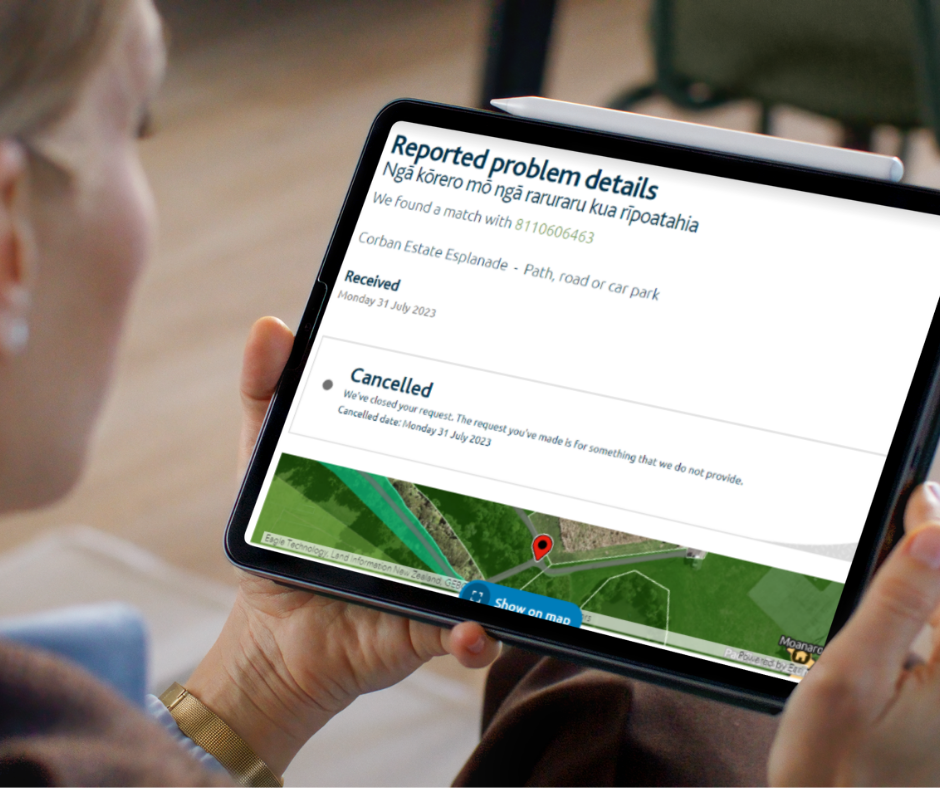
If you haven’t already, make sure you report problems through Council or Auckland Transport; they may not know there is an issue. Give them a couple of weeks. If they start doing a good job, then find somewhere else that’s neglected.
Decide what things you want to tackle first, and have a walk around the area. Get a grasp of what needs doing and what you want to do first.
Safety
If you’re doing stuff yourself, it’s your own fault if you injure yourself. If you’re inviting others along, you need to be responsible for them.
Consider the area you’re working in. If you’re going to be working on the path, is it wide enough to allow people to pass safely?
What are the sightlines like? You need to take extra care working near blind corners. How are you going to manage path users and warn them to slow down? You could put signage near the entrances to pathways or near where you’re working, use orange cones to warn people as they come up to blind corners, and wear high viz vests to make sure they notice you. Advertising your work before commencing not only gets you more help, but also lets path users know what’s going on. A volunteer could wait nearby to let path-users know about the clean up as they go past. Think carefully about where your signs are placed to ensure the path is still accessible and safe.
What’s the access like for yourself and any equipment? What are you going to do with green waste, rubbish and recycling? Are there any hazards such as steep banks, loose gravel, streams or ponds?
Ecomatters has some tips for disposing of weeds, and may be able to provide some support for working on tricky terrain.
Check out Bike Auckland’s Health and Safety template and list of potential hazards (and ways to manage them) to help you plan.
Getting the word out
To start, we used the Bike Eastern Suburbs’ Facebook page and the Bike Auckland events page and email newsletter. We invited other local groups (like the pony club) to get involved, and asked them to share about the event through their networks. We also put up posters around the path. We now advertise on the neighbourhood Facebook pages a couple of days beforehand, then follow-up with a post with photos on the Monday after the event. Collecting email addresses of volunteers helps make it easy to directly remind them when the next event is coming up.
Potential problems
Now you’re all excited, we’d better look at the downsides. Weeds don’t take a holiday. It can be disheartening to find the area you cleared is full of weeds a month later.
Some people may not appreciate what you’re doing – they may like overgrown paths!
Your work may get vandalised, plants ripped up, and more rubbish dumped.
Initial enthusiasm may fade, and there may be different opinions in your crew about what should be done.
Don’t despair. If you’re doing something, you’re making a difference to the world and your fears of potential problems are usually far greater than reality. Get out and start something.
Lessons learned
Start today. You don’t need superpowers or someone to take the lead or anyone to give you permission; just get out and start doing something. Even if it’s just you to start with, taking the first step is the most important thing.
Don’t give up! Navigating the corridors of Council and Local Boards can be frustrating. It can take time to find and get the right people on your side. It’s often easier to just do something and ask for forgiveness afterwards.
Don’t stretch yourself too far. Our local path is over 2km long, and we quickly found it was too much to do it all at once. We’re now just working on a small bit at a time.
Keep yourself and others safe. We haven’t had any incidents, but we do have a list of hazards and how to mitigate them.
Ask for help. There’s a wealth of people who will lend their time and expertise, and supply you with plants, tools and materials if you just ask them.
What’s stopping you?!
More resources: