

Auckland is trialling its first intersections using Shared Barnes Dance phasing, where both pedestrians and bikes move through the crossing at the same time.
The Shared Barnes Dance crossings, with their distinctive person-plus-bike signals, are at the intersections of:
- Victoria Street West / Nelson Street
- Victoria Street West / Federal Street
- Victoria Street West / Queen Street / Victoria Street East
What is a Barnes Dance Crossing?
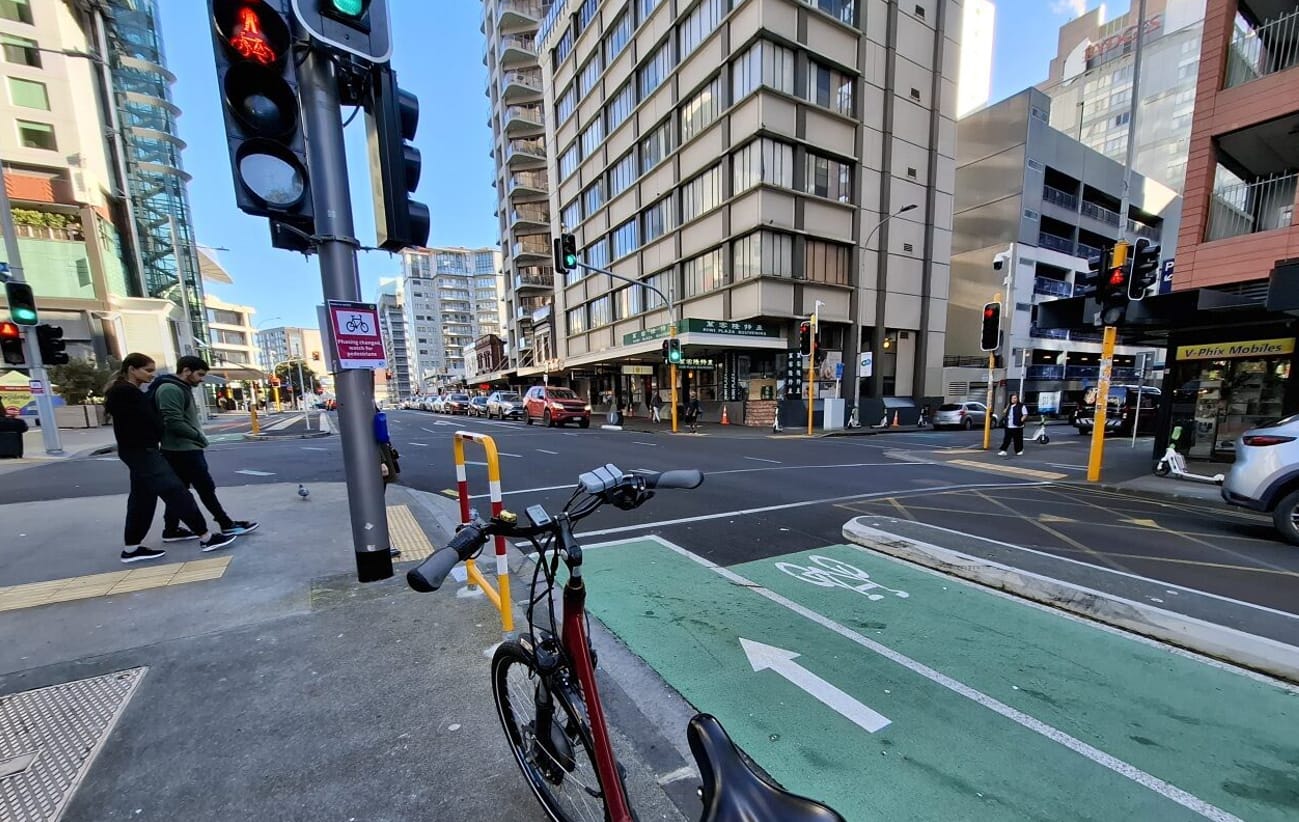
A Barnes Dance (also called a pedestrian scramble) is a traffic signal design where pedestrians can cross in any direction at once, including diagonally. It was named after U.S. traffic engineer Henry Barnes, who used it in cities like Denver and New York in the mid-20th century. Auckland first introduced Barnes Dance crossings in 1958 on Queen Street. They are often used on busy city centre intersections where there is a lot of foot traffic.
A Shared Barnes Dance is similar, but allows bikes to ride across at the same time as people walking.
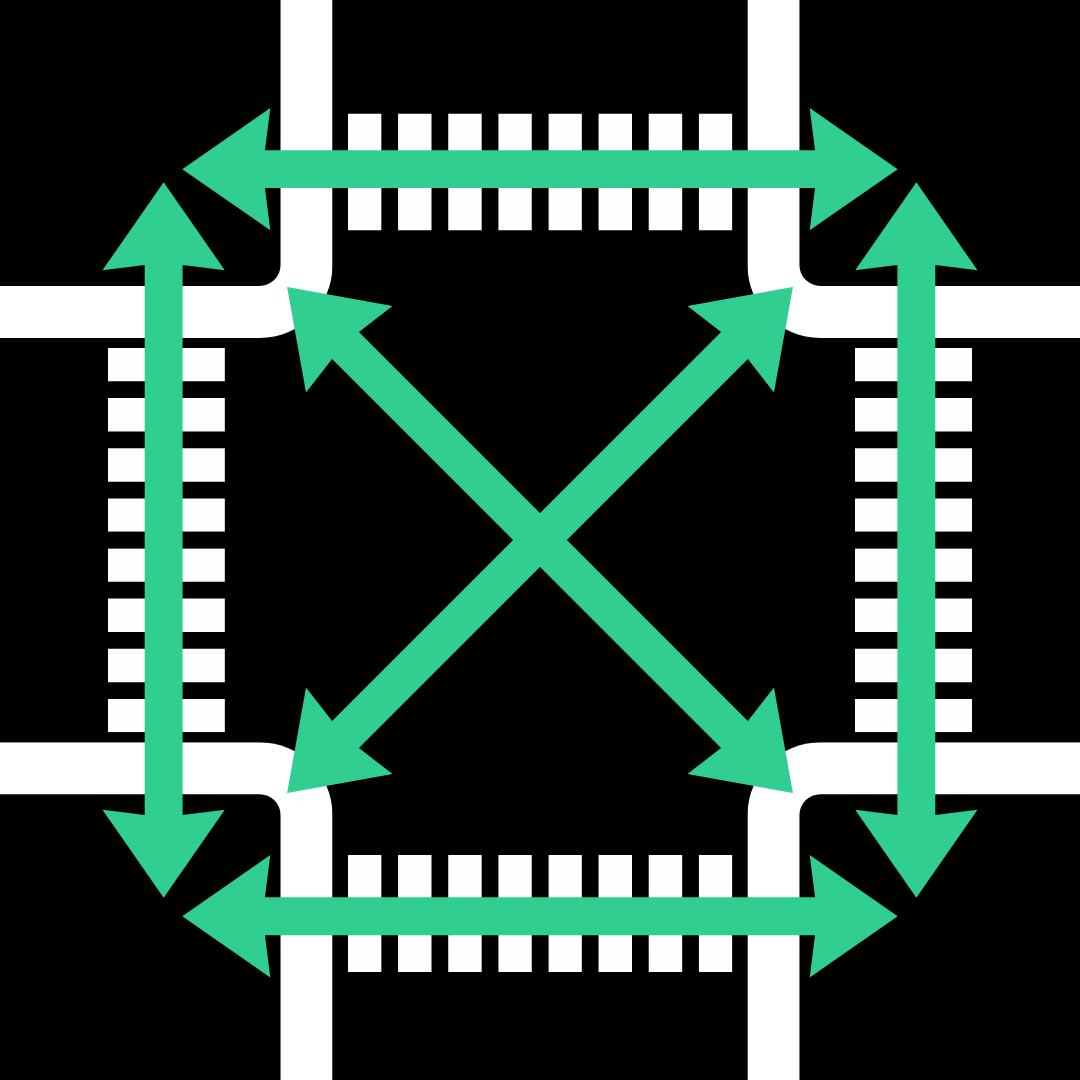
Do you cycle on Te Hā Noa / Victoria Street?
Please take extra care the first times you use the Shared Barnes Dance crossings. We recommend letting more vulnerable and slower road users like pedestrians go first, and giving way to them on the intersection.
Public input is a key part of the trial. You can submit feedback on Auckland Transport’s consultation page. Auckland Transport is also conducting in-person questionnaires at the intersections.
How is the Shared Barnes Dance trial going?
The trial is still in its early days, but initial observations are promising. The intersections appear to be functioning well under the new phasing.
Users have told Bike Auckland that, while it “feels like chaos” when you first experience it, it doesn’t take long to get used to the new approach. It can even lead to positive interactions with pedestrians, as people take the intersection more slowly and you often hear friendly calls of “After you!”
One user told us, “I was sceptical – wouldn’t that lead to more accidents? But when I experienced it, I realised it leads to people being a lot more attentive to each other.”
Over the coming months, Auckland Transport will collect data to evaluate whether the crossings operate safely and efficiently for all road users.
Where did the idea for the Shared Barnes Dance crossing come from?
It’s an unusual set-up, but the concept isn’t entirely new. Trials of Shared Barnes Dance crossings have previously taken place in Christchurch and Dunedin, with reasonably successful outcomes. To explore whether the approach could be adopted more widely, NZTA sought locations with higher levels of foot and bike traffic.
The opening of Te Hā Noa provided the perfect opportunity. Te Hā Noa is a pedestrian- and bike-friendly ‘linear park’ running down Victoria Street in central Auckland, and part of the people-friendly precinct around City Rail Link’s soon-to-open Aotea Station.
Victoria Street’s intersections are among the busiest in the city. Te Hā Noa will channel increasing numbers of people on bikes through these crossings too. It’s a natural testing ground for observing how people on foot and on bikes and scooters mix during crossings. The crossings offer a chance to study real-world behaviour and assess both operational efficiency and safety.
Benefits of Shared Barnes Dance crossings for traffic flow
One of the main advantages of shared Barnes Dance crossings is efficiency. Traditionally, intersections with cycleways use separate signal phases for cyclists. This lengthens the overall traffic light cycle so everyone has to wait longer for their turn. Allowing people on foot and on bikes to cross simultaneously eliminates the need for those extra phases. Everyone gets to enjoy shorter wait times at the lights.
What could Shared Barnes Dance crossings mean for Auckland if the trial is successful?
If successful, the trial could pave the way for broader adoption across Auckland. Shared Barnes Dance phasing would become another tool in the city’s transport design toolkit. They could make it easier to integrate cycle infrastructure at intersections without compromising how long the wait is at the intersection. They could help overall traffic flow, and thereby reduce objections to cycling infrastructure.
More and more people cycling for transport in Auckland is increasing the demand for safe places to ride. As the Auckland cycling network continues to expand, and more cycle lanes are integrated with existing streets, the Shared Barnes Dance crossing, paired with other street design innovations, could create a solution that works for everyone.
Bike Auckland looks forward to seeing the outcome of the trial.