I’ve been watching the fuel crisis unfold this past week with a feeling I can only describe as grim recognition.
Not with surprise, as none of us at Bike Auckland are surprised. We have been saying for years that New Zealand’s near-total dependence on private cars makes us fragile. Not just inconvenienced-on-a-bad-commuting-day fragile. Genuinely, structurally exposed, as households, as communities, as a country. And here we are.
What has struck me most isn’t the crisis itself. It’s the government’s response to it. Or rather, the absence of one. While New Zealanders are anxious at the pump and scrambling to figure out how to get to work and get their kids to school, the central government message has essentially been: carry on as you normally would. I find that baffling. And frankly, a little insulting.
Because the tools to respond are right there. We don’t need to wait years. We don’t need billion-dollar projects. Some of the most powerful levers we have are almost embarrassingly straightforward.
My personal favourite? Reducing speeds. Lower speeds conserve the fuel we have. They make streets calmer and more welcoming. They mean kids can walk or wheel to school without parents holding their breath. They mean someone dusting off their old bike for the first time in years doesn’t have to feel like they’re taking their life in their hands.
And what really excites me is that lower speeds on the Auckland Harbour Bridge could mean we finally open a lane for people on foot, on bikes, on scooters. Something Aucklanders have wanted for so long, potentially unlocked by necessity and a simple speed limit.
Last year’s Government Policy Statement deliberately entrenched our car dependence even further by increasing speeds, pulling funding from cycling and walking, and making school zones less safe. The Roads of National Significance programme, already a questionable use of public money, looks almost absurd right now.
People are already responding by sourcing electric vehicles, using public transport and embracing active travel. Now they need the environment to catch up with their instincts.
We have the ideas. We have the will. What we need now is leadership.
Karen Hormann Co-Chair, Bike Auckland
A win for the east: Merton Road West cycle lanes are finally going ahead
After years of determined advocacy, a missing link in Auckland’s eastern cycling network is finally being delivered. Auckland Transport (AT) has confirmed it will proceed with the Merton Road West cycle lanes (read their update). It’s a decision that reflects the clear support of the wider community, even in the face of opposition from the majority of the Ōrākei Local Board.
Special credit goes to Bike Eastern Suburbs, whose tireless efforts kept this project on the agenda and ensured local voices were heard.
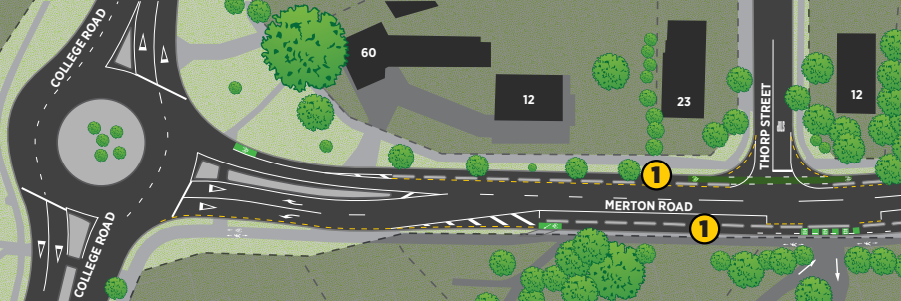
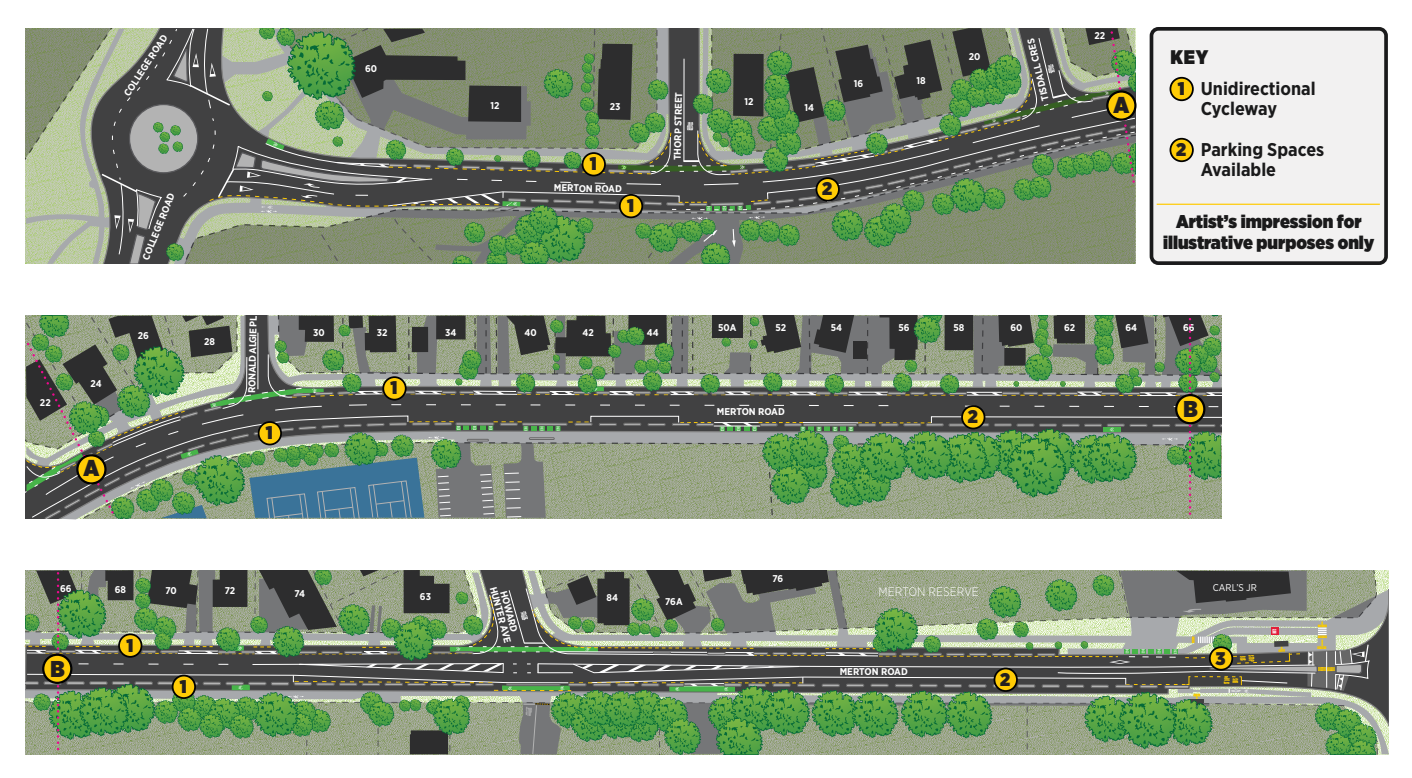
The new unidirectional cycle lanes, running between College Road and Morrin Road, will create a safe, direct route connecting St Johns Park and St Johns to Glen Innes. For many locals, this isn’t just a transport upgrade, it’s freedom. Young people heading to cricket, tennis, football, netball, or the swimming school will finally have a safe way to get around independently, without relying on cars or lifts.
This link has long been part of AT’s plans, completing the otherwise-finished Links to Glen Innes project. Its progress stalled last year when the outgoing Ōrākei Local Board sent the design back over concerns about parking loss. Now, with construction set to begin in the coming months, the focus can return to what matters: safer streets, healthier travel choices, and a connected network that serves the whole community.
Today’s decision is a milestone, and a reminder that persistent, community‑driven advocacy really can shape a better city.
After years of determined advocacy, a missing link in Auckland’s cycle network is finally being delivered. Auckland Transport will proceed with the Merton Road West cycle lanes.
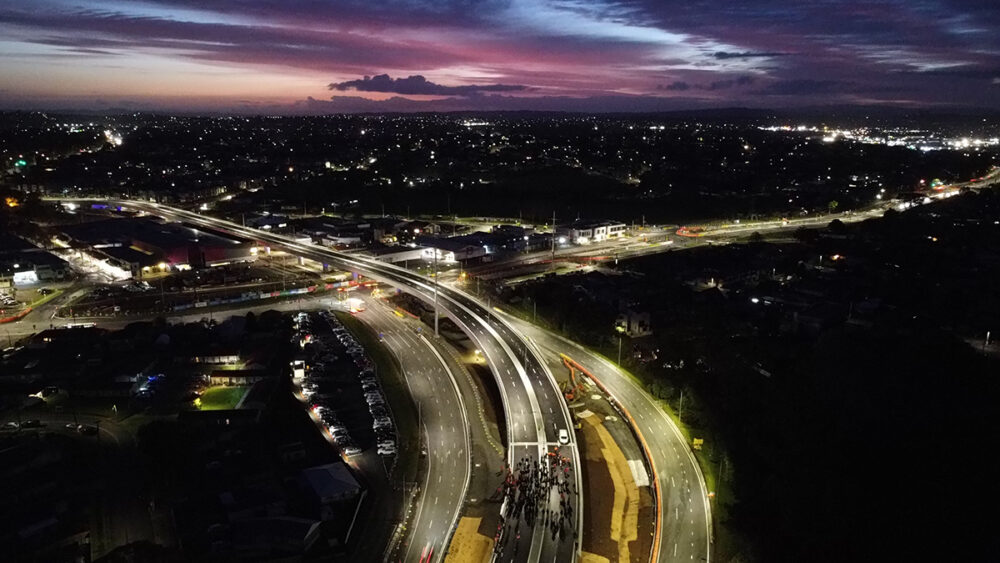
The Reeves Road Flyover was built to improve bus reliability, walking and cycling safety, and long-term traffic flow across Pakuranga — not just to add space for cars. We’re concerned by calls to remove the planned cycle lane or safety features.
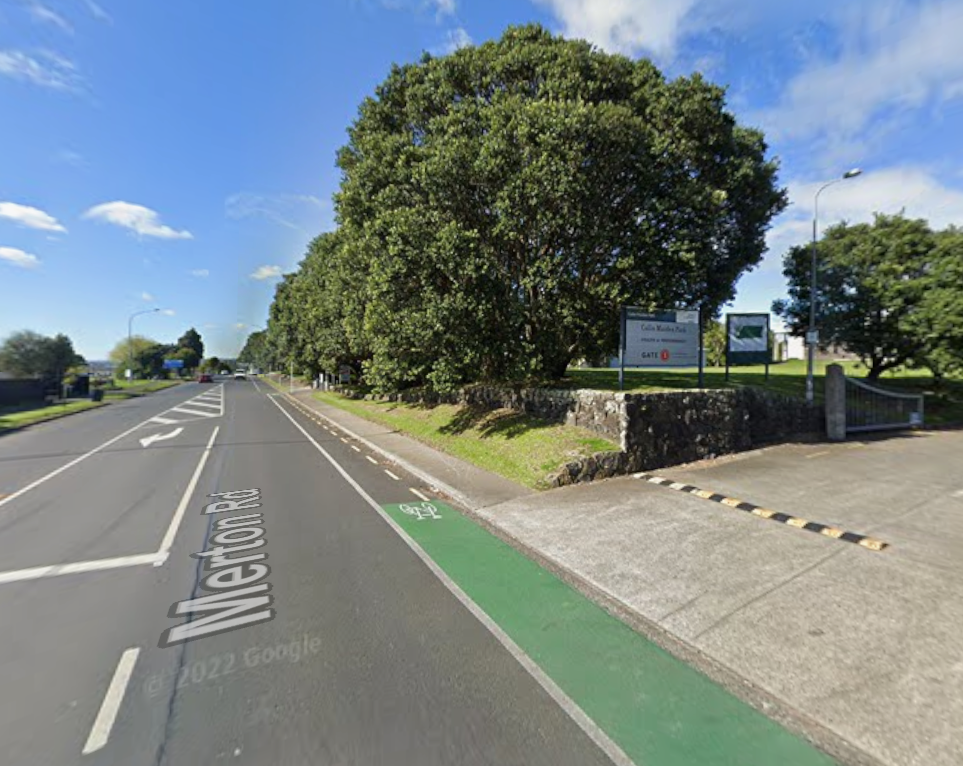
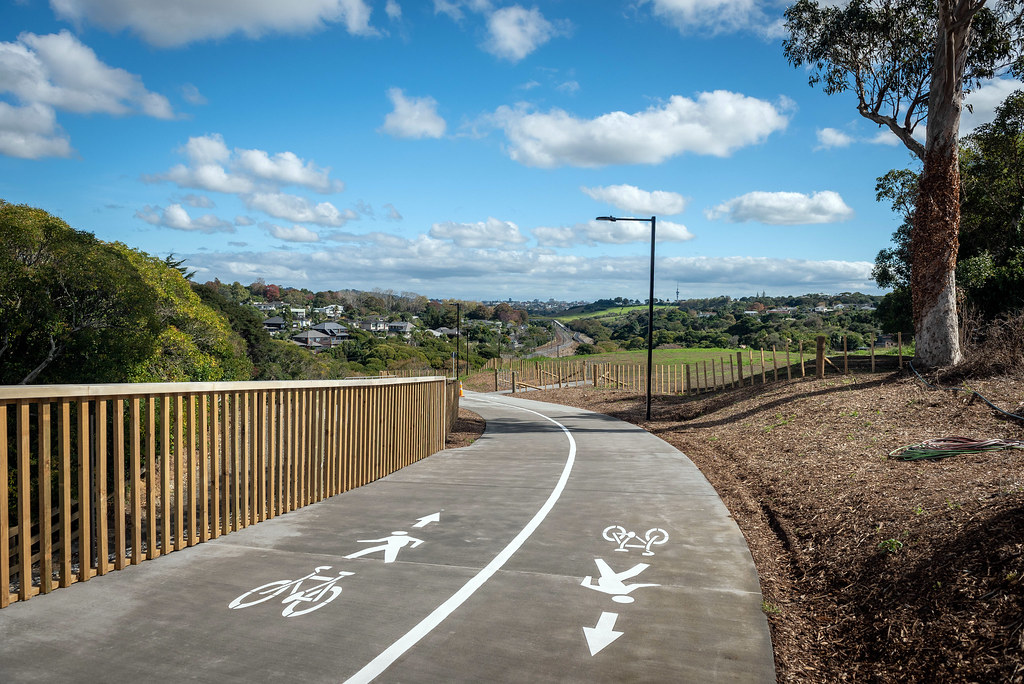
If you’ve been down Merton Road lately, you’ll have noticed something new and shiny — a protected cycle lane! This has been a long time coming. When Stage 1 of the Glen Innes to Tāmaki Drive Shared Path (Te Ara Ki Uta Ki Tai) opened in 2016, the lack of safe links to and from the southern end was a glaring omission. It’s worth celebrating.
Thanks to the tireless drive of one keen mountain biker and her hard-working community, central east Auckland will be home to an incredible bike park one day soon.
Around the world, a curious and delightful trend has been making waves: people transforming their bicycles into fish. Fish bikes are a reminder that cycling can be playful, personal, and even a little surreal.
Charmaine from Bike Eastern Suburbs shares her anticipation as a local for the network of protected cycleways that will be provided by the Links to Glen Innes Cycleways project. She encourages Auckland Transport to “get on with it”, so we can get riding for our A to B!
Imagine if someone announced a new 7km off-road cycleway connecting well- established residential parts of Auckland with wide smooth paths, spectacular city and harbour views, high-flying bridges revealing historic pathways passing bush, streams and estuaries, and linking to train stations. Would we be ecstatic and bursting with anticipation? You bet! That’s how we responded in… Read more: Join us for the celebration of stage 2 of Glen Innes to Tāmaki Path
Great North Road officially opened, plus AT updates on high friction surface and parking
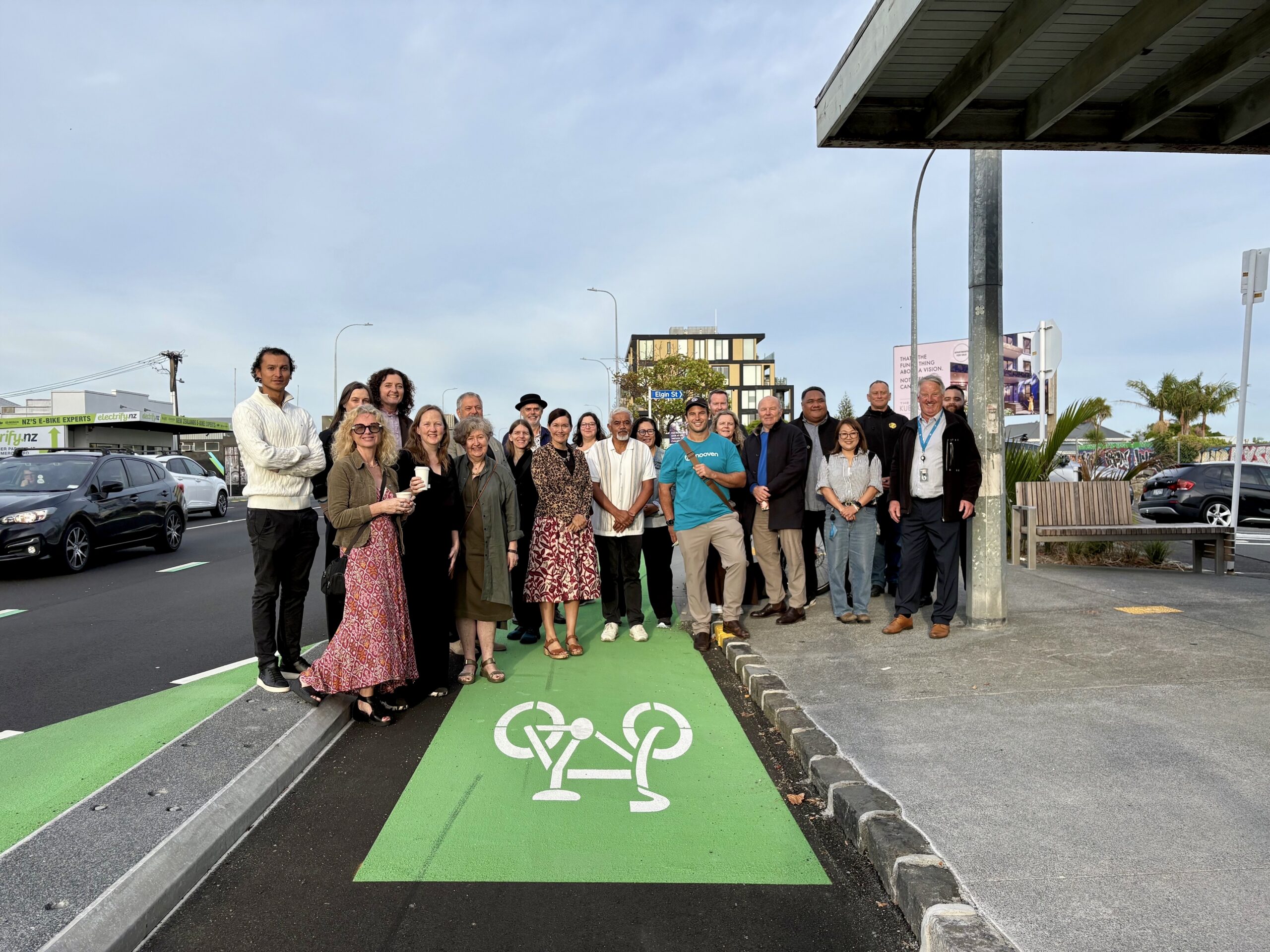
Ngāti Whātua Ōrākei led enthusiastic bike advocates and others in a karakia tikanga, blessing, on the recently opened Great North Road cycleway this week.
We enjoyed a stunning sunrise for this beautiful moment. As we’ve previously mentioned, it’s been a very long time coming, and we are savouring how special it is.
Survey on repair of high friction surfacing
Auckland Transport have shared that the high‑friction surfacing on Great North Road has now been repaired. They would like to hear about your experience during construction.
Auckland Transport also shared the outcome of their parking management review. Based on what they heard from stakeholders including residents, businesses, and others, they have made some changes to the original proposal and are now formalising these updates.
They expect the new signage and pay machines to be in place within the next three months.
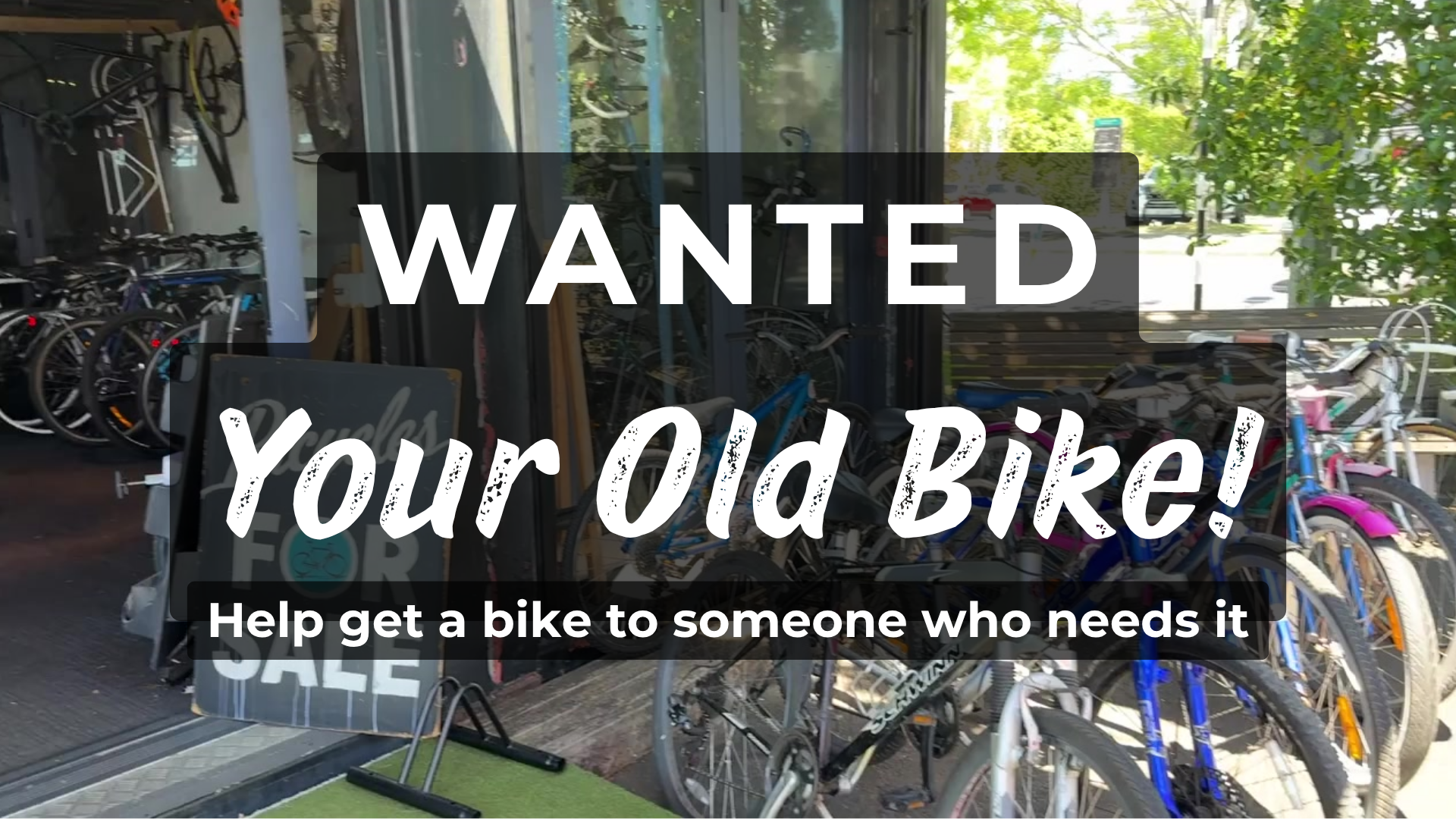
Give your old bike a new life: donate it to an Auckland Bike Hub
Across Tāmaki Makaurau, fourteen Bike Hubs are humming with activity. The hubs are a citywide network helping thousands of people keep rolling – whether they need a quick repair, a confidence‑boosting skills session, or an affordable refurbished bike to call their own. And right now, they are busier than ever.
One of the superpowers of these hubs is what they do with donated bikes. Every week, locals drop off bikes that have been sitting unused in garages, sheds, and basements. Skilled volunteers and mechanics then bring them back to life, fixing them up and getting them into the hands of people who need a reliable way to get around.
It’s a simple idea with a big impact. A donated bike can become someone’s new way to get to work, take kids to school, or stay active without the rising cost of fuel eating into the household budget. At a time when many families are feeling the pinch, access to a safe, functional bike can make everyday life a little easier.
So if you’ve got a bike gathering dust, or a few spare parts you’ll never use, now is the perfect moment to pass it on. Your donation helps keep the hubs thriving, supports more people to ride confidently, and strengthens the cycling community across Auckland.
Have a look through your garage. That old bike might be exactly what one of your neighbours needs to start riding.
As the fuel crisis bites, parents shouldn’t be forced to pay exorbitant fuel prices to drop the kids at school. We need to find affordable, safe, and easy alternatives for our school community.
School runs are particularly tough on fuel use – here’s why:
Every trip is doubled. Drop‑off and pick‑up each create a there‑and‑back journey, multiplying car movements.
Short trips burn more fuel. Cold engines are inefficient, so those quick school runs use disproportionately more petrol.
Congestion wastes fuel for everyone. School‑run traffic slows the whole network, increasing stop‑start driving.
Fixed school times create traffic spikes. When everyone’s forced onto the road at once, fuel use jumps.
A bike train is the cycling equivalent of a walking school bus. We think it’s a great solution for our school, especially right now, during the fuel crisis.
Bike trains are usually run by parent volunteers, and we’re happy to take responsibility for recruiting the helpers needed. The only thing the school needs to do is support the bike train by being a champion for it, and by sharing communications with the school community on behalf of the bike train organisers. See page 11 of the PDF.
We’d love to have a meeting with you to talk more about this idea. Please let us know when suits.
Calmer, slower streets are a fast, guaranteed way of getting more people walking, scooting and cycling. And getting people using active modes is, in turn, the number one, easiest, cheapest, best way of cutting Auckland’s emissions.
This guide was originally published in Greater Auckland, and it is republished here with permission.
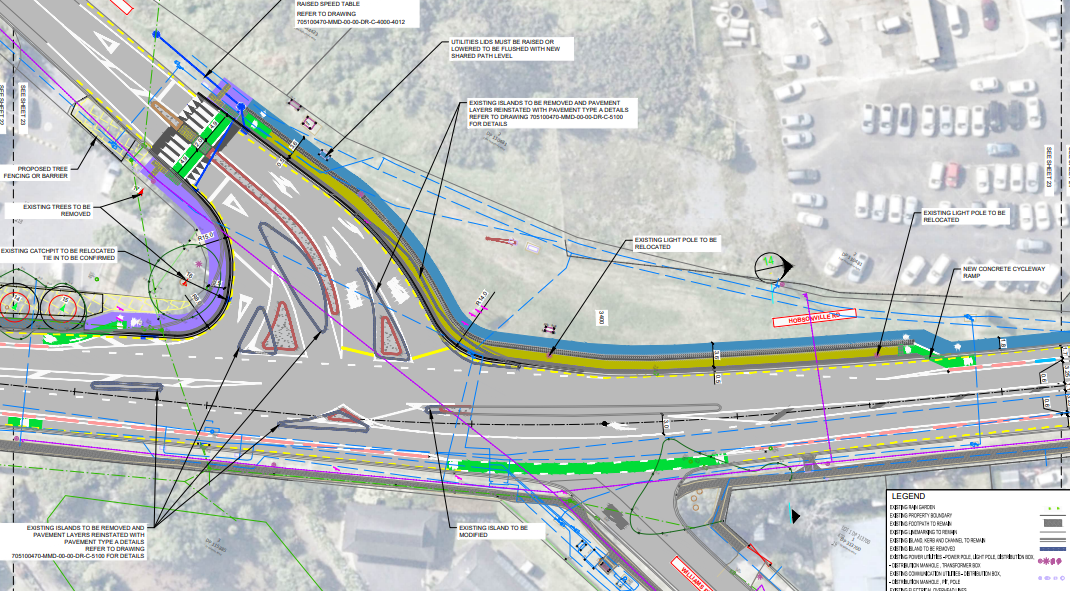
Construction of the Hobsonville Road Cycleway has been underway since the start of the year. When complete, it will link from the NW Shared Path at Westgate to the North Shore at Greenhithe.
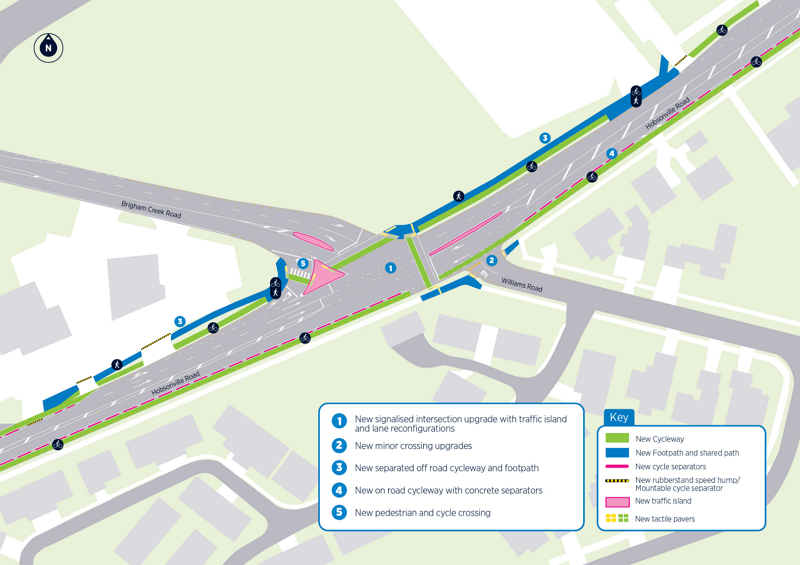
This is an incredibly dangerous intersection that should have been upgraded when Hobsonville Rd was replaced as a State Highway by the motorway in 2011. It’s an intersection that has seen many crashes – Matt was hit by a car here just last year while cycling to work.
AT’s original plan had the cycleway diverting to a raised crossing 50m down Brigham Creek Rd which would have been both very inconvenient for those on bikes, and would have done nothing to address the safety issues that exist for all road users.
The original design at Brigham Creek Rd
Thankfully, their new plan addresses this by signalising the intersection.
Trig Road
Further south, another dangerous intersection – which originally involved a similar kind of approach as proposed for Brigham Creek – is also getting signalised.
The original design at Trig Rd.
It appears AT are squeezing some traffic extra lanes in, meaning the cycleway moves off the road and becomes a shared path.
Oreil Ave
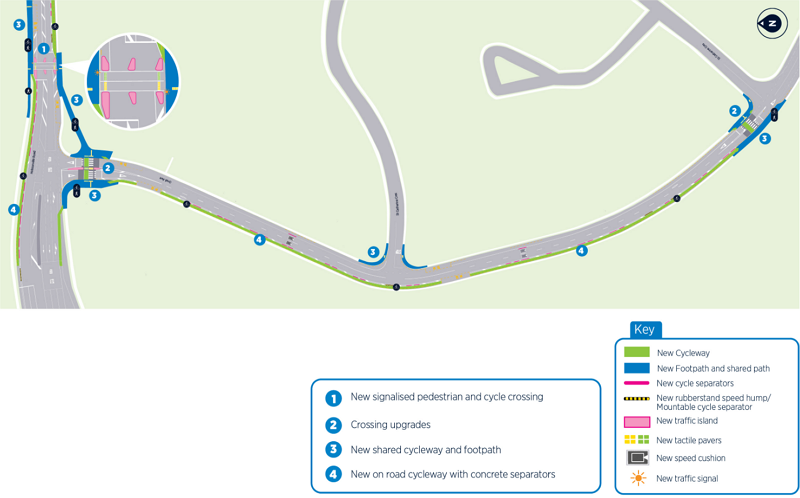
If you cross from the Northwestern Cycleway over the yellow bridge at Westgate, you’ll end up at Oreil Ave – which presents a bit of a hill to climb to get up to Hobsonville Rd, and then the question of how you get to the new cycleway heading east.
AT previously said they were investigating a new crossing near here. The new proposal adds a signalised crossing, but also adds an uphill protected cycleway on Oreil Ave, as well as a raised crossing by the end of the yellow bridge, and speed cushions.
Overall these changes look positive and should be supported.
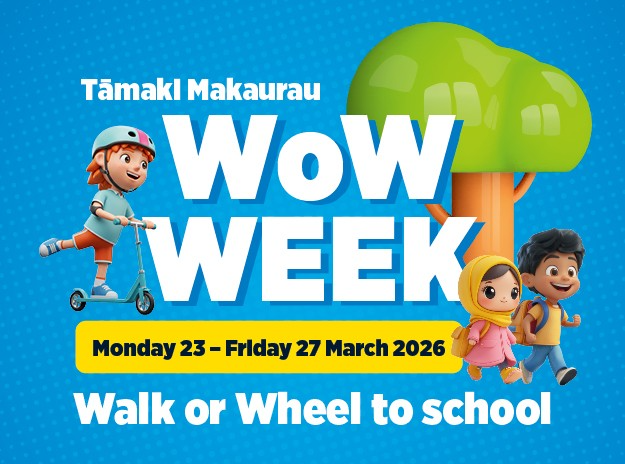
Auckland’s very first WoW Week – Walk or Wheel to School has kicked off, and the energy at school gates across the region is unmistakable. Scooters, bikes, balance bikes, tiny feet in bright sneakers… It’s a joyful parade of movement, and for many families, it’s the first time they’ve tried an active school run.
And that’s exactly why WoW Week matters.
For years, families have told us they want to walk or bike more, but something always gets in the way. It might be confidence, routines, traffic, weather, or simply not knowing where to start. WoW Week, which is organised by Auckland Transport, gives everyone a reason to try it just once. And often, once is all it takes.
This week, thousands of tamariki are discovering that biking or scooting to school isn’t just possible. It’s fun, social, and surprisingly easy.
Parents are realising the school run doesn’t have to mean sitting in a queue of cars. Kids are gaining independence and road confidence. And schools are seeing calmer, safer gates with fewer vehicles squeezing in at drop‑off.
The daily themes, from Wheelie Wednesday to Funky Feet Friday, add a spark of celebration, but the real magic is what happens quietly in the background: families building new habits.
Parents try biking with their kids to school “just once” then never stop. Tamariki who were nervous on Monday are confidently rolling in by Thursday. Teachers are noticing happier, more energised students arriving in the morning.
Why does it matter that kids walk or wheel to school?
School drop‑off and pick‑up supercharge car dependence. Every trip means an adult driving there and back, often twice a day, and again for activities, creating huge volumes of short, high‑emission traffic. When kids can walk, bike or scoot themselves, they gain independence earlier and we cut a massive chunk of unnecessary car trips from our streets.
Active travel does all the things we care about:
reduces traffic and chaos at the school gate
cuts carbon emissions
boosts physical and mental wellbeing
creates opportunities for engagement with the people and places where we live
gives kids a sense of freedom and joy.
Once you try it, it’s hard to go back
WoW Week is a reminder that when we create a moment for people to try something new, they often discover they love it.
And once you’ve seen how good the school run can feel on wheels (or feet), it’s hard to go back.
Here’s to every family giving it a go this week – and to the many who will keep rolling long after WoW Week wraps up.
Discover Manurewa on two wheels: lunch, laughs, and local paths
If you’ve ever wondered where the best bike routes in Manurewa are – the ones that help you skip the traffic, feel safer on the road, and actually enjoy the ride – the team at Bike Hub Manurewa has you covered. Their new Lunch & Ride series is all about showing locals just how easy, social, and fun everyday cycling can be.
“We want people to feel confident getting around their own neighbourhood,” says Bike Hub Lead Reesh Casey. “There are so many handy bike paths in Manurewa that people don’t even realise are there. A guided ride is the perfect way to discover them.”
A Ride for Everyone: No Lycra Required
Lunch and Ride is designed with absolute beginners and seasoned riders alike in mind. Whether you’re eight or eighty, whether your bike is shiny and new or a little dusty from the shed, you’re welcome.
“All you need is a bike and a helmet,” Reesh says. “We’ll take care of the rest. It’s a relaxed, social afternoon out, not a race.”
Each session includes a gentle guided ride through local paths, followed by a stop at a nearby café for a quick cabinet lunch. It’s the kind of outing that feels like a treat but also sneaks in a bit of movement and fresh air.
Why People Are Signing Up
For many locals, the appeal goes beyond the ride itself.
“This is a great experience for anyone worried about fuel prices, trying to fit exercise into a busy schedule, or wanting something fun to do with the whānau during the school holidays,” Reesh explains. “It’s our way of introducing the community to the best biking experiences in Manurewa – in a fun, safe, and sustainable way.”
The vibe is friendly, the pace is easy, and the goal is simple: help people feel at home on their bikes.
Part of EcoFest, and Part of a Bigger Vision
The Lunch & Ride series is launching as part of EcoFest, running on select Thursdays and Saturdays from 26 March to 16 April. It’s a chance to celebrate low‑carbon living while building confidence and connection close to home.
“We want people to see cycling not just as recreation, but as a real option for getting around,” Reesh says. “If we can help someone feel safer on a bike, that’s a win for them and for the planet.”
Ready to Roll?
Spots are free but limited, and sessions are already attracting interest.
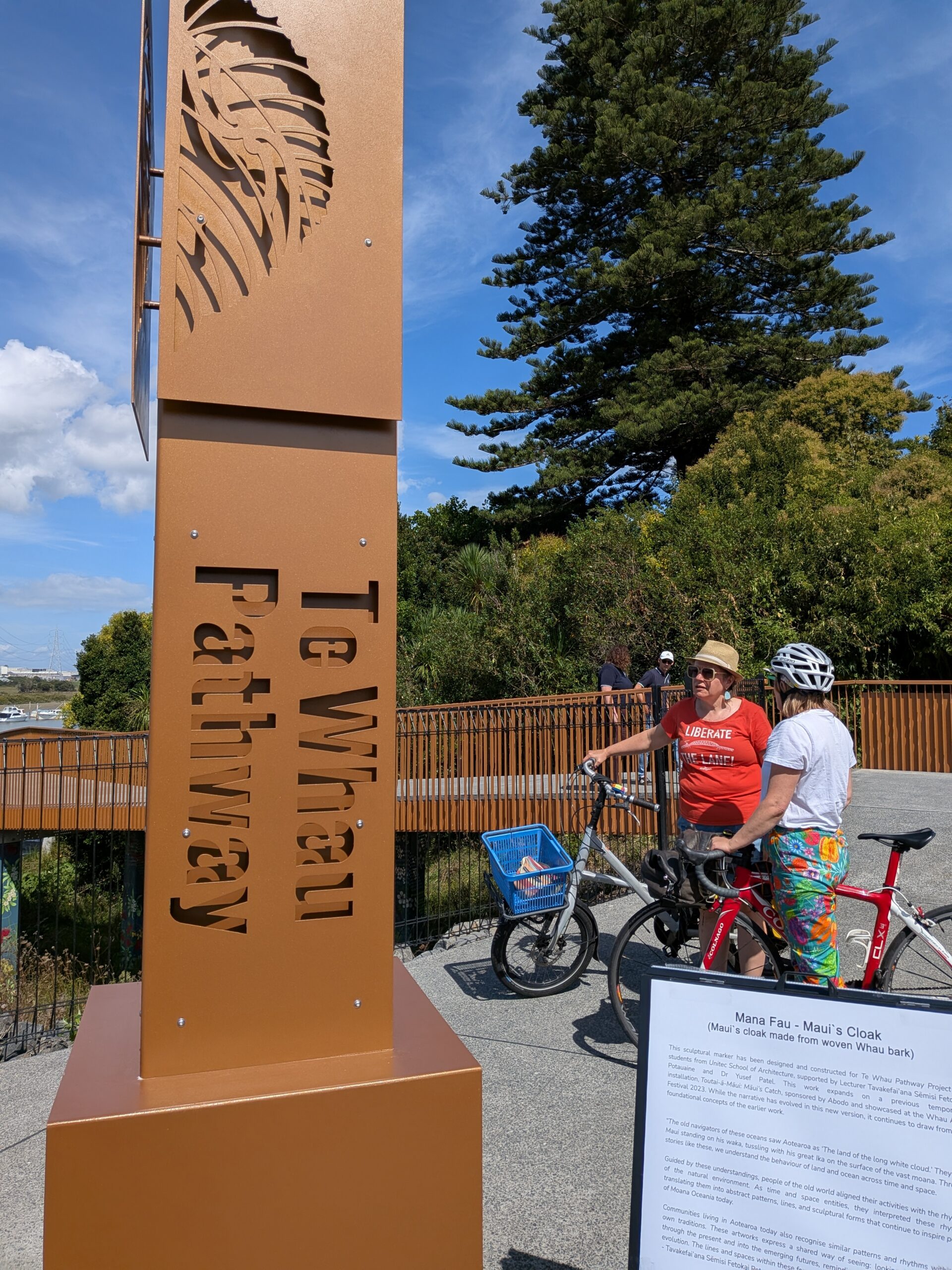
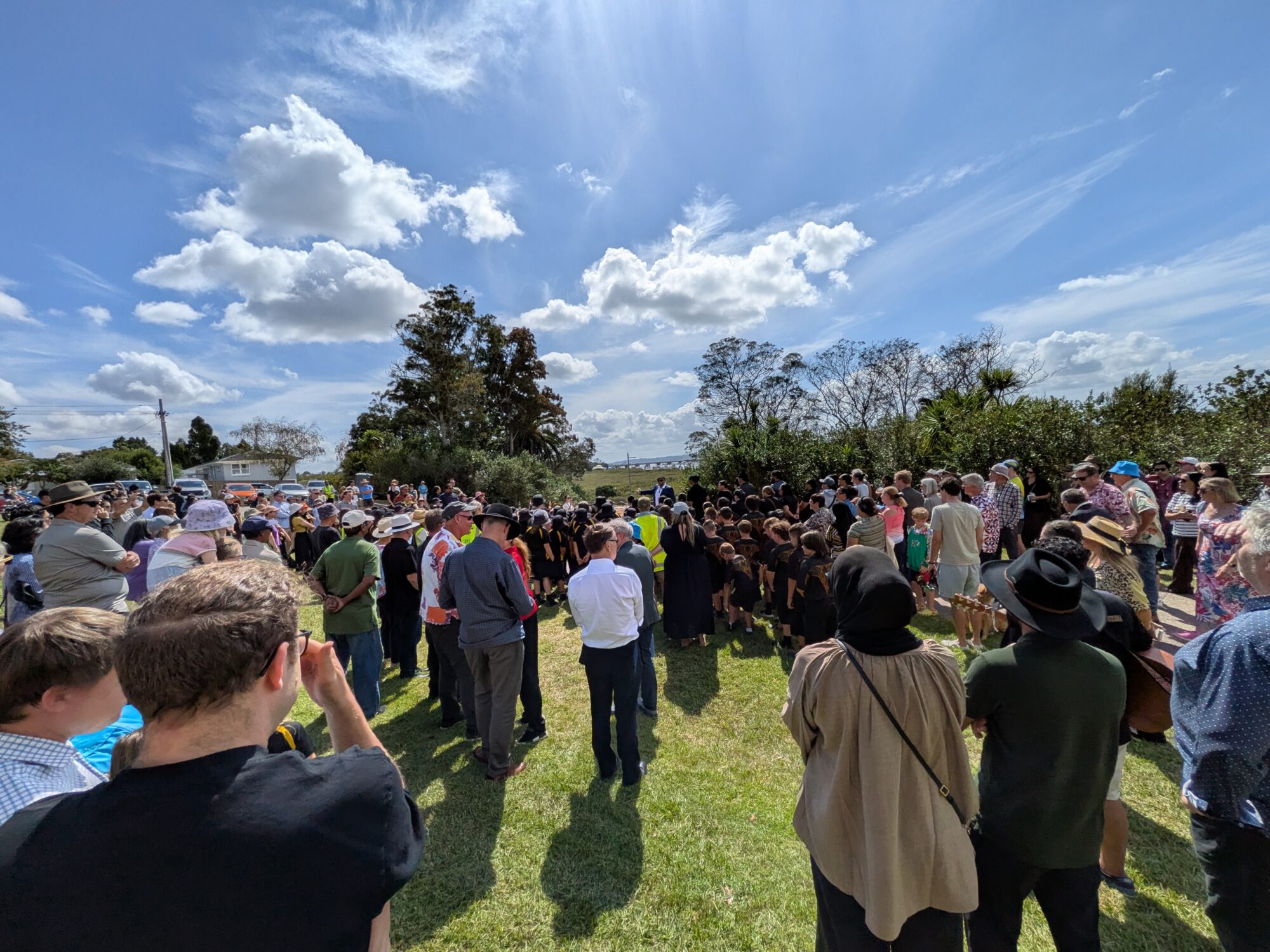
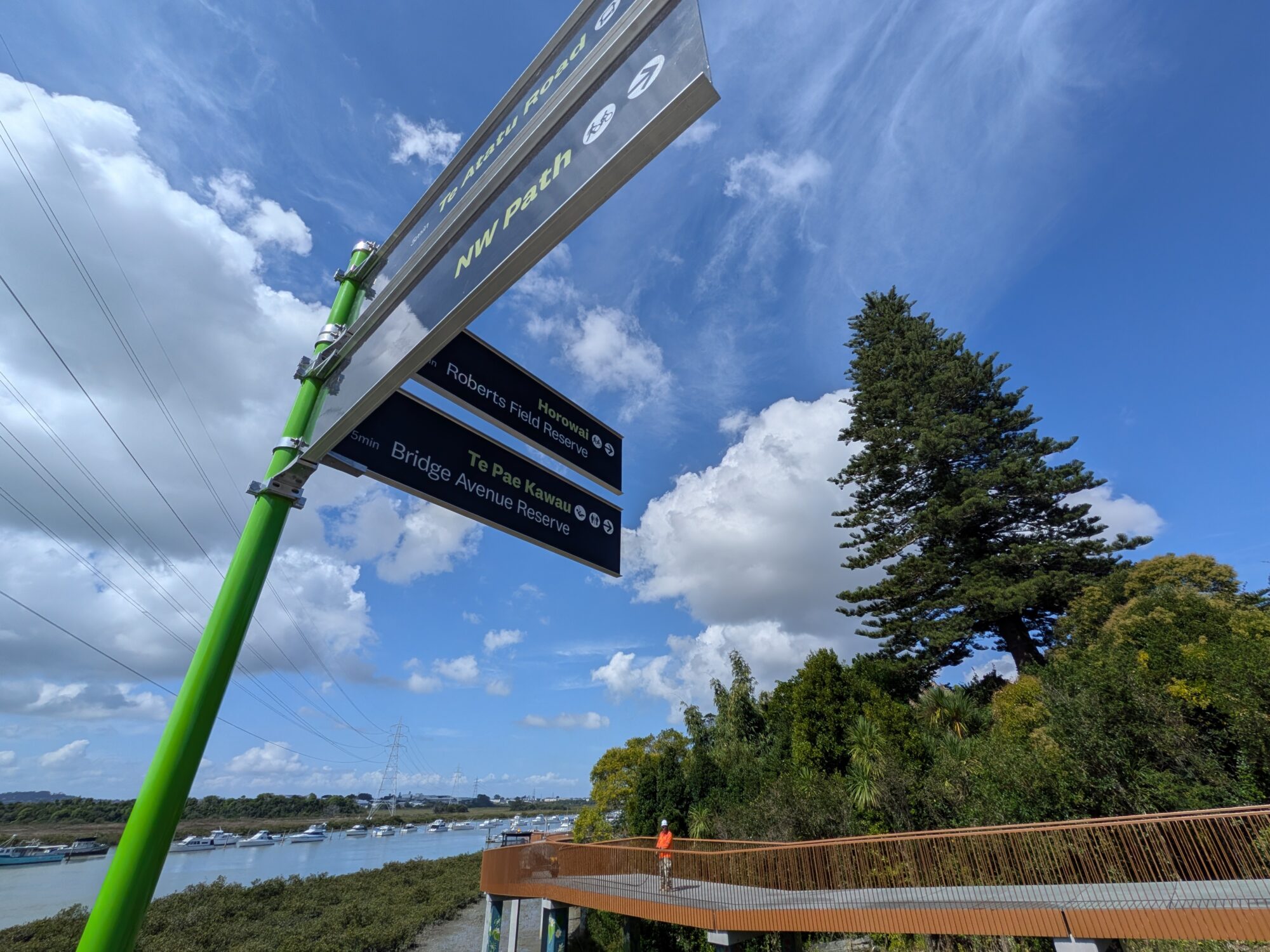
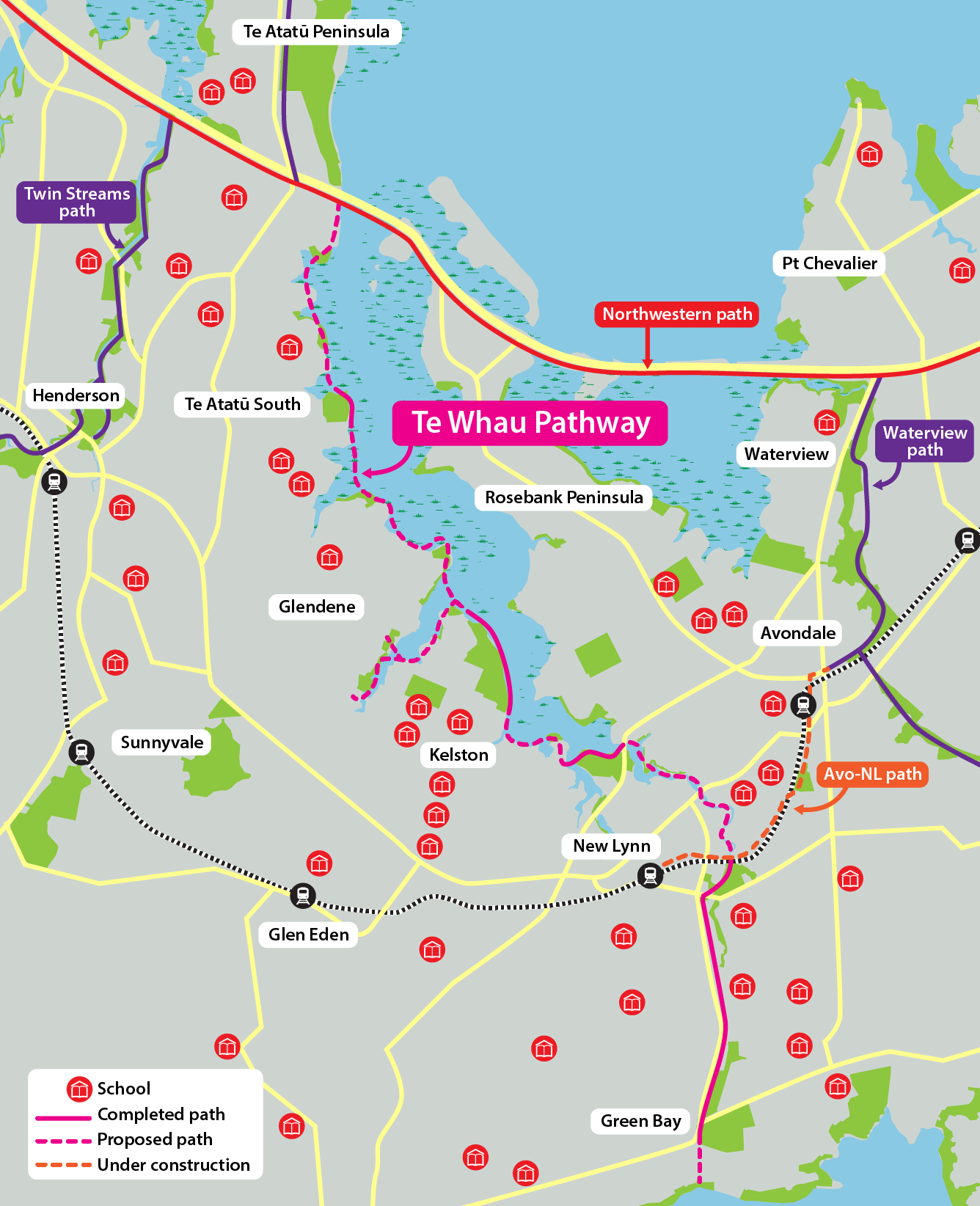
Today we celebrate the opening of the Horowai Connection: the most northerly section of Te Whau Pathway, running almost 2 kilometres from the Te Atatū intersection of the Northwestern Cycleway to Horowai/Roberts Field.
We last wrote about Te Whau Pathway when it was under construction – and already a thing of beauty, inside and out. Today, the dream becomes a reality. We celebrate not only a route, but a destination in its own right. Not only a path for humans, but the waterway it brings us into contact with. Not only nature, but our heritage in following a traditional Māori portage route.
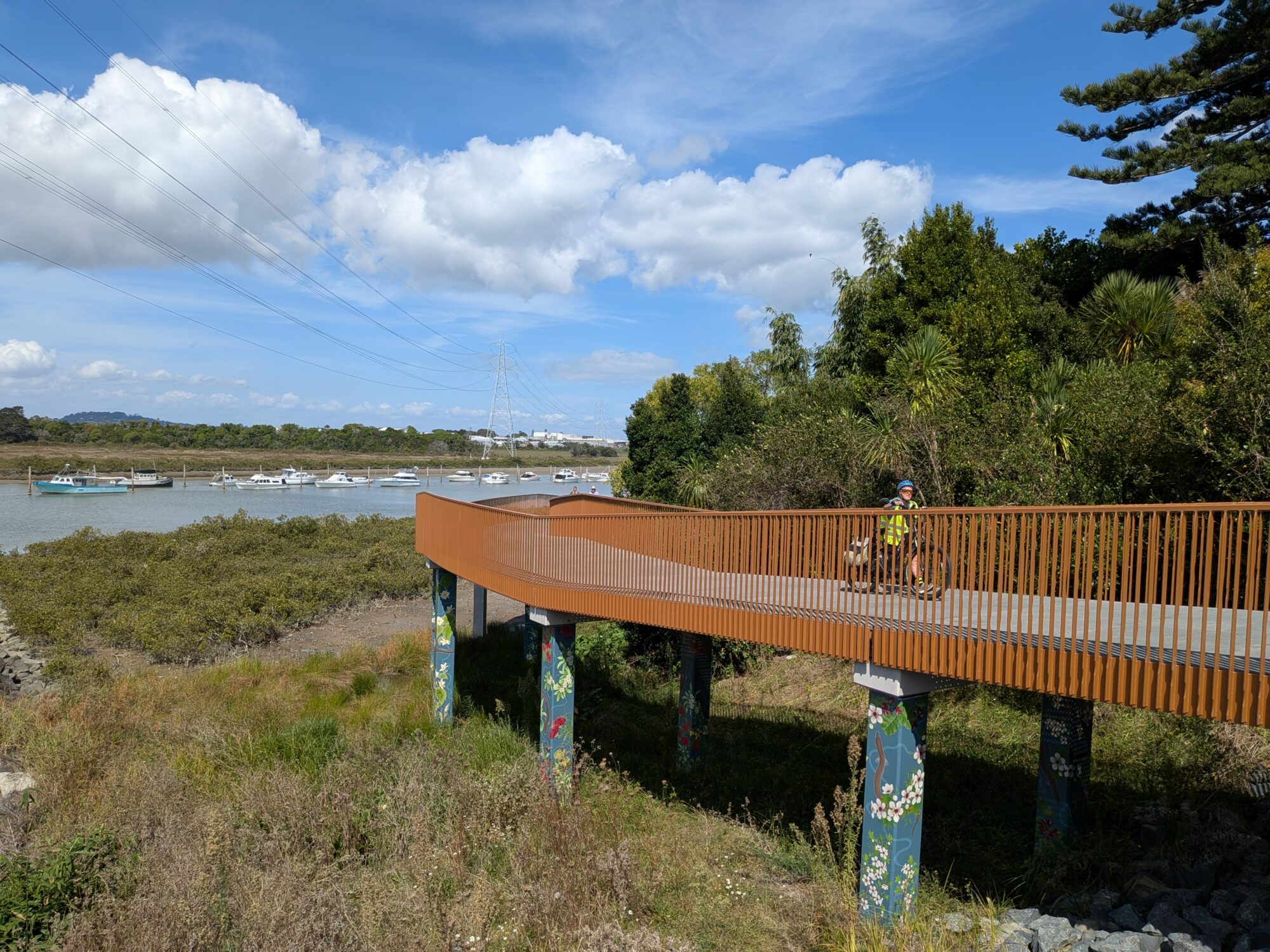
Huge turnout from the community for the openingThe end near the NW Shared Path has murals on the pillarsBeautiful detailing on the lookout points
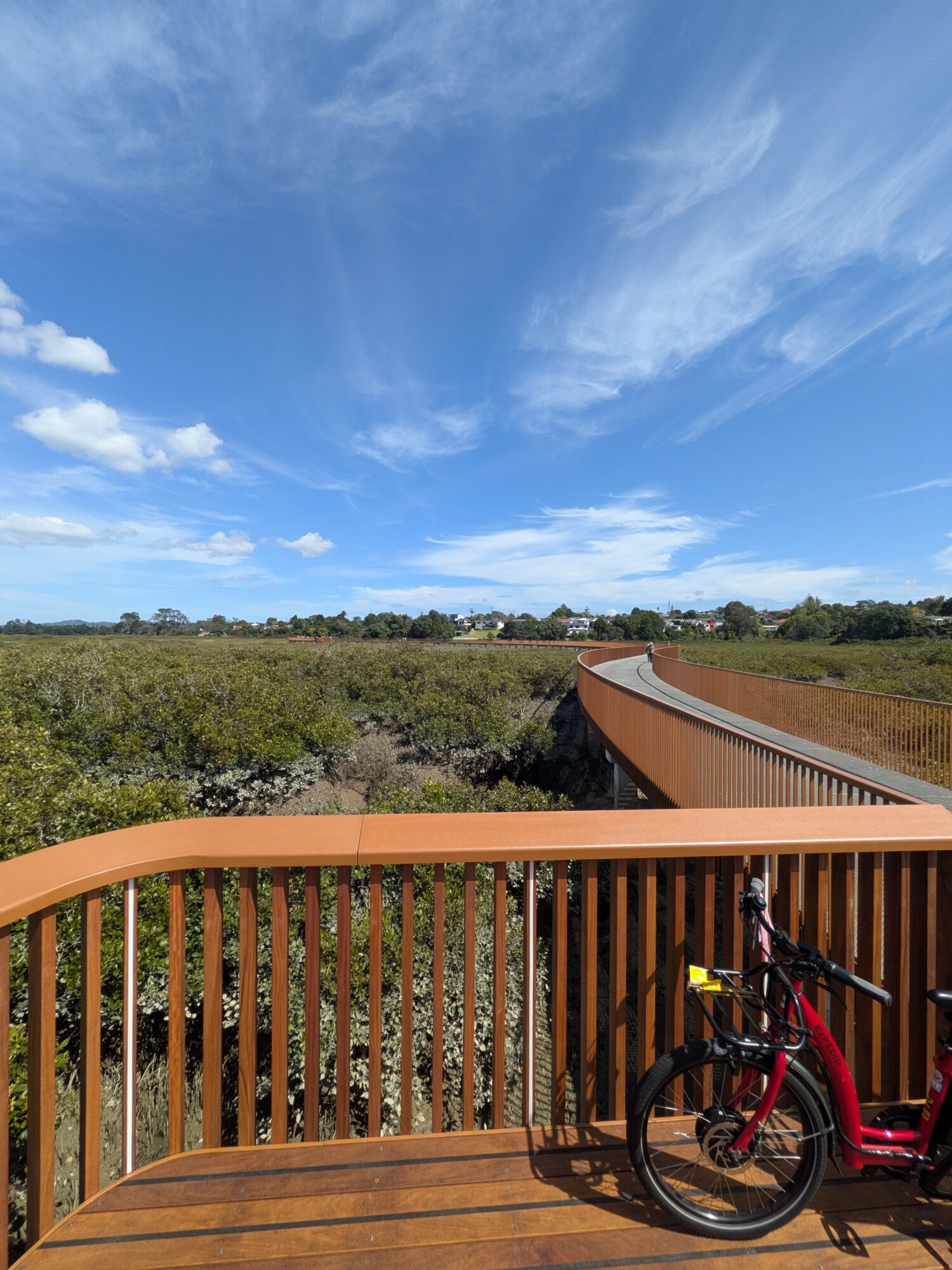
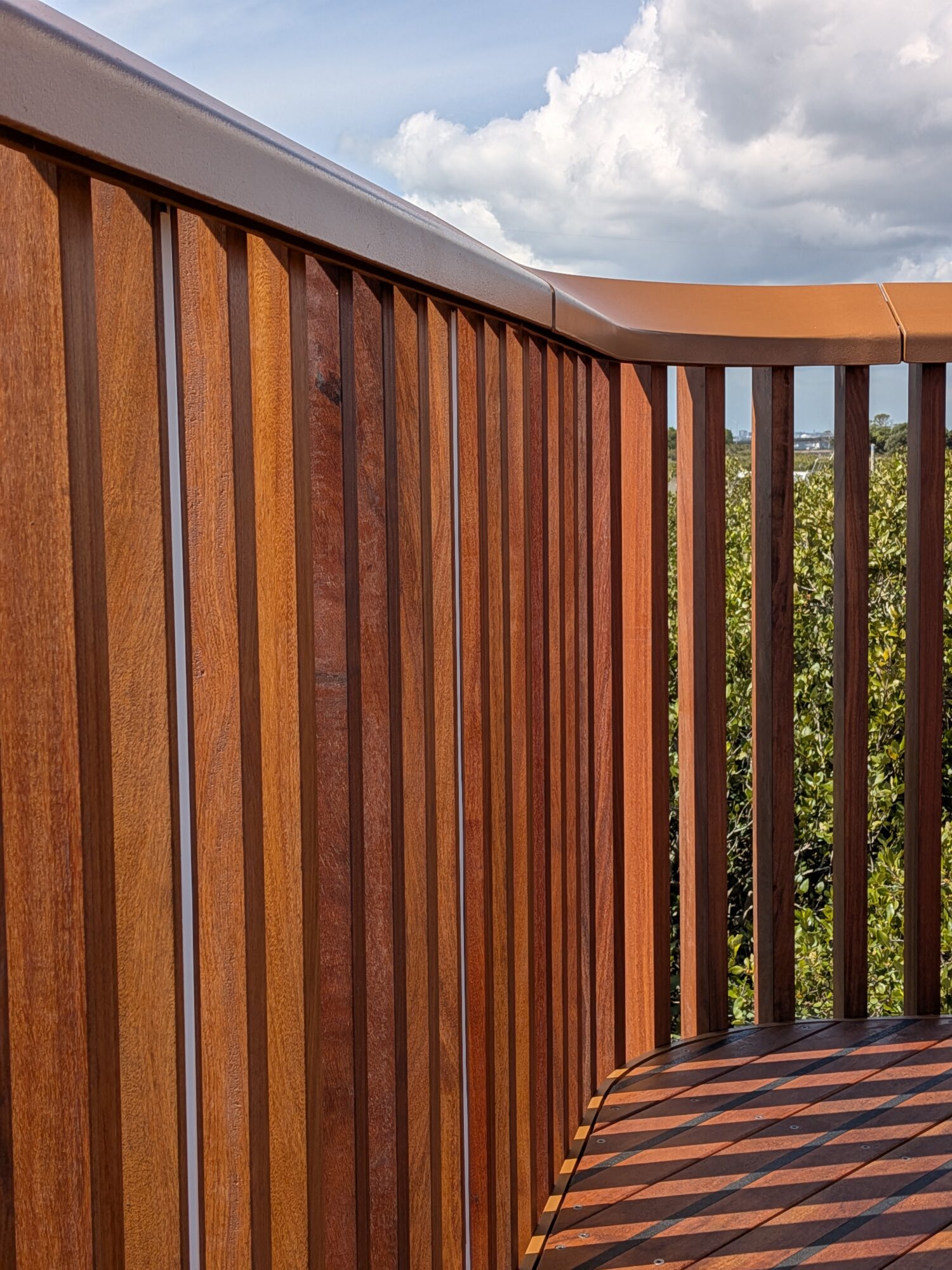
The wide boardwalk hovers over rippling tides and mangroves. Kōtare swoop for shellfish. The curves of the path as it snakes along the Whau river’s path are reminiscent of koru.
The Horowai Connection, plus a few completed on-land sections further south mean Te Whau Pathway is 40% complete. Te Whau Pathway Trust doesn’t yet have funding for the next section: Horowai (Roberts Field) to McLeod Park. They also need funding to commence planning for the section from Rizal Reserve to Olympic Park. We want to see this in Auckland Council’s 2026/27 budget. You can help, by asking them for it in your feedback on the Annual Plan (see our guide).
We think it’s vital that the council commits to completing Te Whau Pathway. When it’s connected up, the full benefit of the investment and work to date will be realised. Continuing the path south creates the connection to existing infrastructure such as the transport interchanges and the New Lynn to Avondale Pathway. One day, it’ll go all the way to the water at Green Bay.
Is it good value for money? The cost of Te Whau Pathway is a little lower than other boardwalk style paths, like the Orakei Basin section of Te Ara Ki Uta Ki Tai. A break in construction if it isn’t funded soon would undoubtedly increase costs. New boardwalk paths are more expensive than repurposing existing road space for cycling (an approach we also love), but that’s a very different proposition than what we’re achieving with Te Whau Pathway.
Te Whau Pathway doesn’t compete for space with other road users. It’s an entirely new route, bringing the community back into connection with Te Whau, and linking up many schools and other destinations without the need to go near road traffic. The quiet is truly a delight.
CANDo is a weekend of cycling change-making, where you can recharge your passion, sharpen your advocacy skills, and join a nationwide network of people shaping a better cycling future for Aotearoa. This year hosted by Bike Auckland in Ponsonby, it takes place next weekend, 20-22 March 2026.
This year’s CANDo brings together a powerhouse lineup of experts, community leaders, and creative thinkers to discuss how we move from “car-dominant” cities to thriving, human-scale communities.
From the world-class infrastructure of the Netherlands to the grassroots activism of South Auckland and Whakatāne, our speakers are ready to share the blueprints for a cycling revolution. Here is a closer look at the voices leading the charge.
The Strategy of Systems and Spaces
Lennart Nout: the Good, the Bad and the Ugly: Where to from Here?
Lennart Nout is an urban mobility specialist who recently moved from the Netherlands to establish the Mobycon Pacific office in Auckland. After working and living in the Netherlands for almost 10 years, Lennart will share his perspectives on the state of cycling in Auckland. He will highlight the things to be proud of and share his insights into effective cycleway delivery going forward. Advice on what to focus on in terms of advocacy, his unfiltered opinions on the latest generation of cycleways and most importantly, where to from here? A bit of fun, a bit of cringe and a bit of inspiration for cycling advocates around the country.
Dr. Tim Welch: Born to Ride: The Revolution Rides With Us
Based at the University of Auckland’s Future Cities Research Centre, Dr. Tim Welch explores the intersection of climate resilience and urban design. His talk focuses on the “quiet revolution”: the generational shift that occurs when we normalise cycling for our children. By moving through the city at human speed, the next generation sees the impact of car dominance firsthand, making sustainable transport a lived reality rather than a political debate.
Christine O’Brien: Engaging with your Local Board
With years of experience as the Deputy Chair of the Māngere–Ōtāhuhu Local Board, Christine O’Brien knows how to navigate the corridors of power. She has been instrumental in making Māngere a leading hub for cycling in Auckland. Christine will provide a masterclass on how to effectively move active transport projects through the local government machinery.
Grassroots Power and Community Activation
Louise Tu’u: Desire Paths: Who is a Real Cyclist?
Louise Tu’u works as an actor and writer, both onstage and onscreen with over 20 years of experience. She will share how using her creative practice informs her cycling advocacy in South Auckland, with projects such as Brown Womxn Who Cycle, Find My Way and the benefits of being undercover.
Matt Fordham: Change at the speed of trust – the importance of connecting councils and communities
Matt Fordham founded and leads Crank, a consultancy that delivers innovative transport projects focused on getting more people to choose more trips by walking and cycling. Matt will talk about how changing our streets to enable more trips by bike depends on the strength of connection between councils and communities. This session shares lessons from cycleway projects where close collaboration with local communities helped build trust, move forward, and support lasting change.
Regional Reflections and Road Stories
Richard Hamer: Small Town Cycling – Bike Whakatāne Trust
With over 30 years in community development, Richard Hamer proves that big changes happen in small towns. As President of the Whakatāne MTB Club and a founding member of the Bike Whakatāne Trust, Richard has been the engine behind popular events like Ride the Runway. He will discuss the “why” and “how” of regional advocacy and the importance of strong local partnerships.
Stephen Wood: Personal Reflections on Advocacy
Stephen Wood (Spokes Canterbury) balances a background in science and volunteer firefighting with a deep commitment to the Cycling Action Network. Fresh off a bike ride from Wellington to Auckland and the Trafinz conference, Stephen will reflect on the advocacy work in Christchurch and the power of the various riding communities he supports across the country.
Don’t miss out: register today!
The insights shared by these speakers are the fuel we need to keep our momentum going. Whether you are a seasoned advocate, a city planner, or simply someone who wants safer streets for your family, CANDo is the place to connect and collaborate.
Final call for registration
To ensure we have space and catering for everyone, please complete your registration by this Wednesday.
As we look in dismay at events unfolding in the Middle East, we are reminded yet again that overseas events can have an impact on our personal lives: the price of food, internet outages and how we choose to travel. Our choice of how we get around on any day is a mix of personal preference and cost. These are, in turn, the product of policy settings, our built environment and – although we often ignore it – global geopolitics.
The periodic outbreak of war in the Middle East is one time the private and public world of our transport choices collide, through a phenomenon known as ‘pain at the pump’. At the time of writing Brent crude is $107 per/bbl with an expectation that it will rise further. This means New Zealanders will soon be paying a lot more to fill their gas tanks. In a country in the midst of a severe downturn and with one of the highest rates of car ownership in the OECD, there is a lot of hurt coming down the pipeline.
This will be made worse by the current government’s focus on making Aotearoa New Zealand ever more dependent on fossil fuels. All our fuel is imported. The electric vehicle subsidy has been withdrawn. The Government Policy Statement on transport has slashed funding for cycleways, public transport and even footpaths, and envisages spending many billions on roading. This is essentially locking us into a fossil fuel-dependent future.
New Zealanders need alternatives to car dependence, and they need them urgently. Key to helping New Zealanders’ mobility is being able to travel safely on bikes. Being able to shop, commute, and access services is vital for wellbeing. And we know that protected cycleways are good for local businesses, that they change the way people travel, and make streets safer for everyone.
Bike Auckland is once again calling out the folly of remaining hooked into the global oil network. We urgently need more bike lanes, more public transport, and renewable energy supplies to help de-couple the New Zealand economy from oil price shocks.
The government’s vision of roads and more roads belongs in the 1950s.
It is 2026, a time of global turmoil and accelerating climate change. Time to change track.
How to have your say on Auckland Council’s Annual Plan for 2026–2027
This is an opportunity to tell the Council loud and clear that safe streets and transport options are important to you. You can do this by including your feedback that you want more investment in safe cycleways. If there are any particular projects you especially want to see funded for next financial year, make sure to mention them.
Short of time? If you do nothing else, these are the key points to include
In question 4, Other comments on the Annual Plan:
If you would like to see Council invest in and deliver more fast and affordable safe cycleways, to create a connected cycling network, mention it here.
Mention any specific projects or routes you’d really like to see completed (see lists below for inspiration!).
If you support active transport for climate-related reasons, you could mention your support for Auckland meeting its climate change commitments by helping people get around by low-emission transport.
In question 6, City Centre:
If you would like Queen Street to remain free of cars, including during evenings, mention it here. You could also mention that Queen Street’s Waihorotiu Path was extensively consulted on and approved by the Governing Body, and shouldn’t be changed by the wishes of a minority without consultation. (More detail below.)
What is an Auckland Council Annual Plan, and why should I care?
Auckland Council has plans detailing its planned spending for 1 year (the Annual Plan), 10 years (the Long Term Plan) and 30 years. Usually, the 1 year Annual Plan is created from the budget priorities identified in the Long Term Plan. These plans sit alongside (and should be consistent with) other plans such as Te Tāruke-ā-Tawhiri: Auckland’s Climate Plan.
The next Annual Plan, also known as the annual budget, covers the period from 1 July 2026 to 30 June 2027.
Council must give Aucklanders an opportunity to give feedback on its Annual Plan, and it reports back on the feedback it receives.
The 2026/2027 Annual Plan covers the period when Auckland Transport will be transformed and walking and cycling projects are expected to move to Local Boards. Therefore, it’s especially important to let Council and Local Boards know what you need from them in order to be able to get around safely by bike.
For people who ride bikes, it’s a good opportunity to let Council know how many of us want to be able to get around safely by bike, and how important it is that Auckland improves its bike infrastructure.
Why Council needs to hear from Aucklanders about the importance of keeping cars off Queen Street
There is a push by some Queen Street businesses to remove the cycle lanes on Queen Street and replace them with traffic lanes.
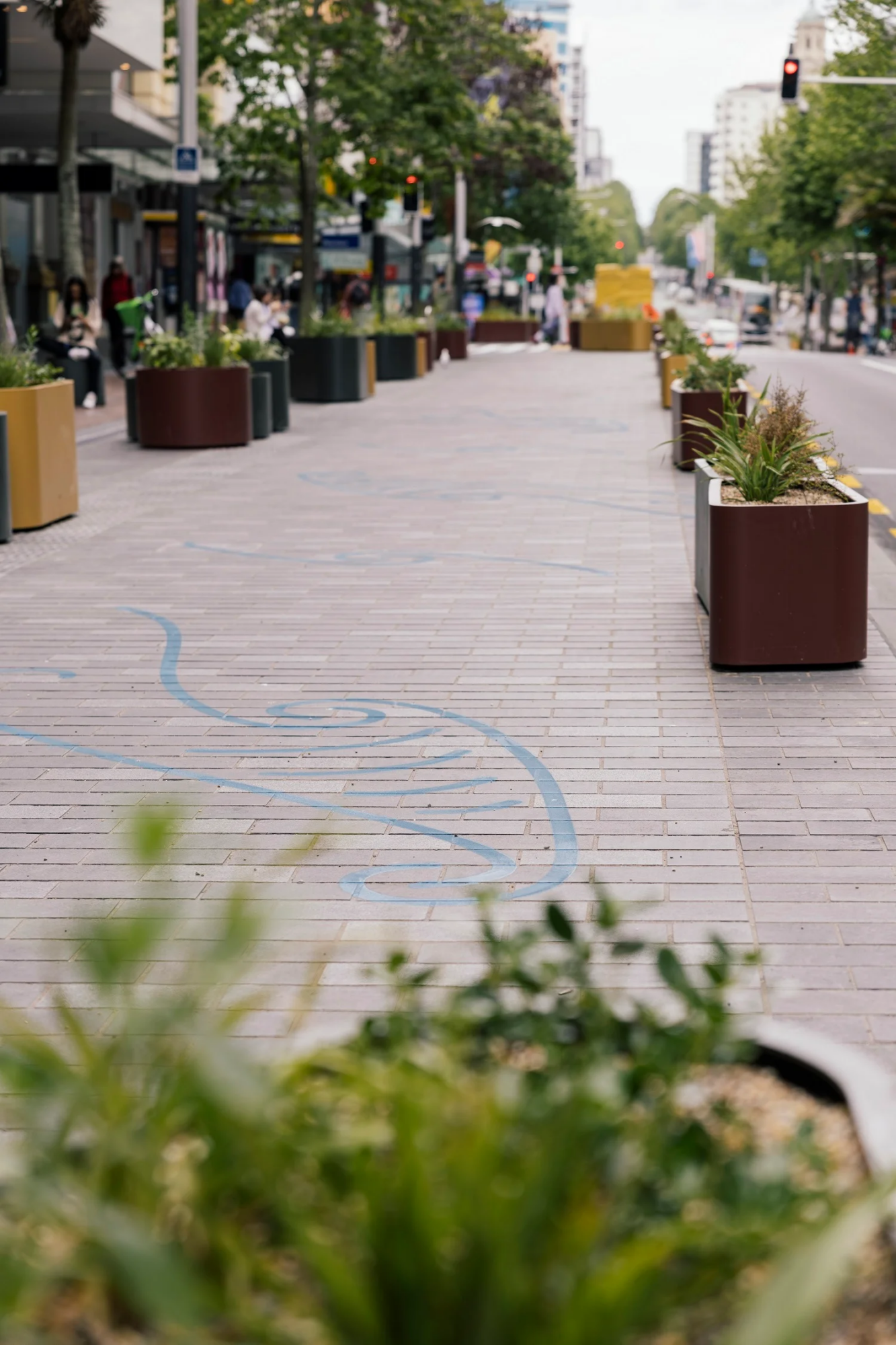
Waihorotiu Path on Queen St, credit Our Auckland
The Council and AT need to be reminded that the Queen Street lanes were extensively consulted on and approved by the Governing Body.
Reasons to keep the Queen Street car-free include:
The Queen Street cycle path is the only safe cycling route in the city centre and is the only north-south route. Bringing back traffic and parking will make the central city less safe for everyone. It will slow down buses, making sustainable transport less practical for people.
The removal of the cycleway and replacing it with another two lanes of traffic and parking would also result in many months of disruption, which central city shopkeepers have been very vocal in saying they do not want.
Replacing lanes would also be expensive at a time when the Council is trying to keep costs down.
Areas which have been pedestrianised have seen an increase in profits for the businesses on those streets.
The Auckland City Centre Master Plan envisages Auckland’s city centre as Auckland’s ‘cultural, civic, retail and economic heart.’ Other cities have recognised that this is incompatible with multiple lanes of traffic belching out fumes, and the Auckland Council must recognise this, too.
Add any other reasons you can think to bolster your case.
These cycling-related projects ARE included in the Annual Plan
Major Projects you can comment on, including some transport projects, are listed on pages 10-11 of the Consultation Document. (More on how to include these in your feedback below.)
Ones which directly relate to getting around by bike include:
Progressing the Eastern Busway and associated cycle lanes.
City Rail Link and associated improvements to active transport amenities.
Carrington Road improvements including cycleways.
Continued focus on intensification including implementation of Plan Change 120.
Progressing city centre regeneration programmes. These include completion of public spaces around CRL stations and Te Hā Noa – Victoria Street, and further development of High Streets and Te Toangaroa in line with the City Centre Master Plan. This includes retaining and adding to existing active transport amenities.
These cycling projects aren’t mentioned in the Annual Plan, but should be
(More on how to include these in your feedback below.)
Te Whau Pathway will be a vital north-south connectionGreen Lane West’s micro mini bike lanes need improvement (Photo by Tim Duhamel)Kelston-New Lynn-Glen Eden’s future network
Te Whau Pathway – the next boardwalk section between the completed Horowai Connection (NW Path to Roberts Field) south to McLeod Park. Because of the specialist skills and machinery involved in carefully constructing Te Whau Pathway over delicate ecosystems, it’s vital the project has funds to continue in the coming financial year. A pause in funding could really damage the chances of completion – and thereby all the benefits this north-south connection will bring.
If you’re in the Henderson-Massey Local Board area, you could mention this in your feedback in question 3 on the local board plan, where it is not currently mentioned.
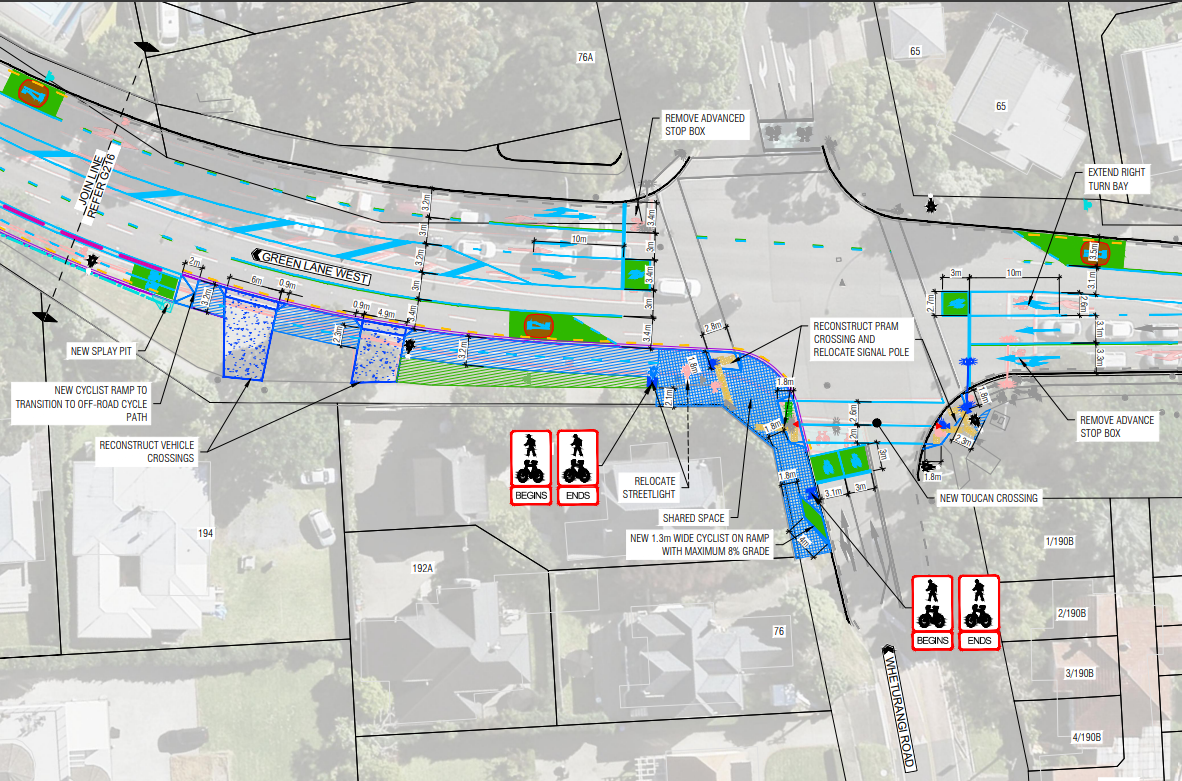
Green Lane West. This arterial is getting an upgrade, but needs funds from Council to make sure it meets safety standards. It’s a critical gap in the map and we want to know Council has it covered.
If you’re in the Albert-Eden or Maungakiekie-Tāmaki Local Board area, you can also mention it in question 3 about local board plans. It is not currently mentioned in these local board plans.
Great North Road / the Inner West remaining gaps. Auckland Transport has done so much to connect the Inner West with safe cycleways, but there remain glaring gaps. These include the section of Great North Road from where the new cycleway currently ends down to Western Springs Park.
If you’re in the Waitematā Local Board area, you could include this in your feedback in Q3 on their plan, where it is not currently mentioned.
Māngere East and Manukau Preferred Cycling Networks. Māngere West cycling network is coming together beautifully, connecting us to the airport (after a long advocacy fight). Now let’s join up the dots. Let Council know these two projects are needed by the community.
If you’re in the Ōtara-Papatoetoe and Māngere -Ōtāhuhu Local Boards, you could mention these projects in question 3 on local board plans, where they are not currently mentioned.
Cycleways connecting into the Northern Corridor. Some of these are further along than others. It would be great to voice your support in particular for those which are less advanced, such as Constellation Dr and Greville Rd.
If you’re in the Hibiscus and Bays Local Board areas, you could mention your support for all projects which extend the safe cycling network from the Northern Corridor in question 3 on Local Board priorities.
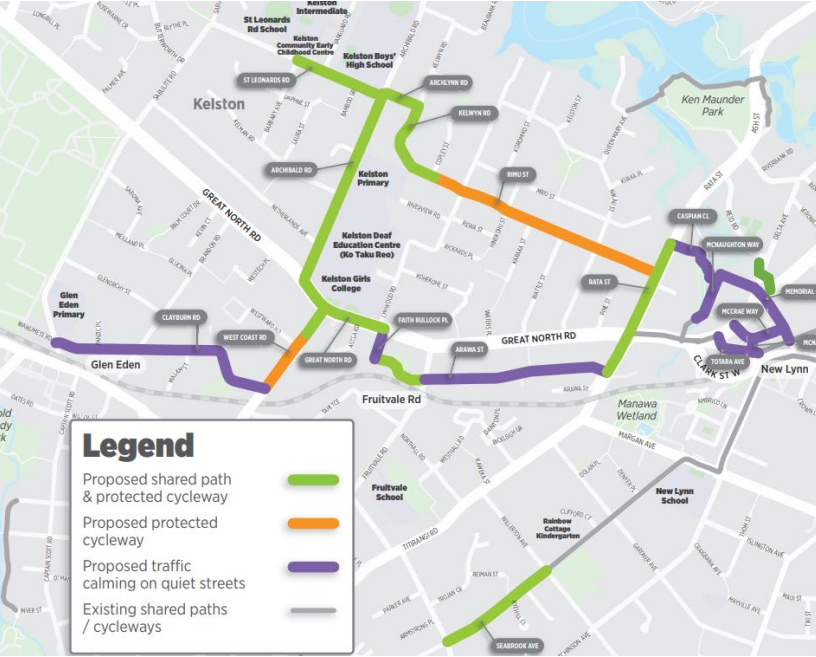
Kelston-New Lynn (and Glen Eden) cycling network. This project puts so many schools on safe cycling routes. Let Council know you want to see it completed.
If you’re in the Whau or Waitakere Ranges Local Board areas, you could also mention your support for this project in question 3 on Local Board priorities.
The Gowing Drive connection, which connects Te Ara Ki Uta Ki Tai across the train line to Gowing Drive and local schools. This is the final stage of the Meadowbank to Kohimarama Connections project and it has strong community support. But this critical link is on hold due to lack of central government funding for walking and cycling projects. Council needs a plan for how to fund the project.
If you’re in the Ōrākei Local Board area, you could mention this in question 3 on the local board plan.
Tips on how to approach your submission
Have your say by Sunday 29 March 2025, 11.59pm.
It is important to tell the Council what you would like to see in your own words. Be firm but polite – your submission is more likely to be taken seriously if you are courteous.
In the comments sections it’s helpful to tell your personal “why”: why does it matter to you? Talking about why it matters to you can be powerful in helping elected representatives to understand your point of view.
If you don’t have much time
All questions are optional – you only have to answer the parts you’re interested in. It’s okay to leave some parts blank – it’s better than not submitting at all. Question 4 is the best question for sharing what you need in terms of cycling.
If you have more time…
Have a look at what your local board has planned. Let them know you support safe cycle connections, pump tracks, and other cycle facilities for your area. You may also want to voice support for investment in community-led activities such as climate action programmes, modeshift initiatives, and bike hubs.
You can also give feedback for other local board areas which you frequently visit. This could include where your workplace is.
While we recommend you write your submission in your own words and make sure to include what you care about most, we’ve provided some prompts below to help get you started. Please note that our focus is on transport. You could look at other submission guides to get ideas about other areas that this Annual Plan will affect.
There are 6 question areas.
Question 1: Our overall plan and proposed increases to rates: what do you think of the proposed annual plan? Why?
Page 8-9 of the Consultation Document gives an overview of the Annual Plan which may be helpful in answering this question.
This is a good place to mention the cycling-related projects which are in the Annual Plan (jump to list), and mention that you particularly want to see the cycling elements mentioned above.
Question 2: Changes to other rates, fees and charges.
This includes a question about how street space is used with a proposal to increase residential parking permit fees. Bike Auckland supports the increase in fees and believes that street space could be better used for active and public transport. Streets are also safer with fewer parked cars.
Question 3: Local board priorities. These questions are specific to your Local Board.
Local Boards are facing funding shortfalls this year, and it is likely that local services will be cut. If you want your Local Board to continue to fund cycling amenities you will need to submit on the Local Board plans. These are covered on pages 15-29 of the consultation document.
Some Local Board areas have questions relating directly or indirectly to cycling, for example, planning housing intensification closer to the city centre and transport hubs enables people to choose bike.
Question 4: Do you have any other comments on the Annual Plan 2026/2027?
This is the place to mention the cycling projects which aren’t in the plan but which you’d like to see – see our list above for inspiration.
We recommend you give broad feedback, and include a personal story about why it matters to you (e.g., “I want my kids to have a safe route to cycle to school so I don’t have to be their taxi, and so that they get more physical activity into their days”).
Here are some ideas for what might be important to you regarding this budget.
“I want Auckland Council to… “
Invest in and deliver more fast and affordable safe cycleways (e.g., pop up bike lanes) and convenient public transport (e.g., bus priority lanes). This can be done fast by reallocating road space (parking or extra lanes) and “building back better” during road renewals. They give all people safe options for getting around by any transport mode.
Invest in and deliver **insert the projects you want to see delivered here** See our list of the ones we think should be mentioned (jump to list).
Jointly with the central government, ensuring 10- and 30-year transport plans include funding for cycling amenities in order to meet the Council’s and Aotearoa New Zealand’s climate change commitments and create a healthier urban environment for all Aucklanders.
Ensure any money saved on cycling projects is reinvested into other cycling projects.
Invest in and progress the City Centre Master Plan which includes improvements for walking, cycling, and accessibility in the city centre – including retaining the safe cycleway the length of Victoria St and keeping cars off Queen St.
Invest in walking and cycling over-bridges / safe tunnels to replace level crossings.
Invest in more bike skills courses across the region, so that more people can experience the joy and freedom of riding a bike – and to support more people to ride from A to B for their transport, reducing our emissions.
Invest more towards safe streets and delivering Vision Zero, including raised crossings, and traffic calming.
Invest more into climate action-related programmes such as Te Ara Urutau – Climate and Emergency Ready Fund, encouraging more people to cycle, walk, and take public transport.
Invest in convenient and regular public transport, including provision of secure bike parking and safe cycleway connections at public transport hubs. For some people using public transport and cycling together as a combo is crucial for their trips.
Provide access for bikes on buses (on board the buses or racks on the front or back of buses). For some people using public transport and cycling together as a combo is crucial for their trips.
Share positive feedback
It’s also a great opportunity to celebrate what has been delivered over the past year, and to give the Council positive feedback on what you have enjoyed and what you’re looking forward to (ideas here!).
Question 5: Looking further ahead / shaping Auckland’s longer-term future: Rank which areas are most important to you over the long term.
After giving your rank to the various areas, including transport, there’s an opportunity to specify what specific council activities or services do you most want us to prioritise, and why. You could mention what you’d like to see in terms of safe active transport.
Question 6: What improvements do you think we should prioritise in the city centre?
There’s an option you could tick called “Getting around” but as well as cycling, it also talks about making it easier to drive in the city centre. We think private cars need to be minimised in the city centre to make space for more efficient transport like buses, trains, bikes and walking. If you agree, click Other instead and tell Council that.
This is the place to mention that you support keeping cars off Queen Street at all times – for all the reasons mentioned above.
How to have your say on the Auckland Council Annual Plan
Complete the feedback form included in the Annual Plan Consultation Document then either scan and email it back, or post it, or drop it off at a library.
You can get a copy of the Annual Plan and the feedback form at your local library or Local Board office. Complete the form and return it as above.
Libraries are hosting low sensory drop-in sessions. They are quieter sessions in rooms with low lighting where you can complete your feedback at your own pace with support and information from staff where needed.
How to find out more about the Annual Plan and ask questions
The Consultation Document
The Consultation Document is a summary of the Annual Plan, covering the Council’s planned major projects and spending.
There is also a Supporting Information document which includes information specific to each Local Board, plus other information about proposed changes to charges for Aucklanders, and a summary of the operational plan for the Tūpuna Maunga Authority. If you want to contact your Local Board directly, email addresses can be found here.
Face-to-face
Face-to-face events will take place across the region where you can provide feedback in person. These are also a great way to meet with Local Board members. The details of these events will be published on the website at akhaveyoursay.nz/ourplan or you can call for more information on 09 301 0101.
Webinars
The Council is holding online webinars, where subject-matter experts will be discussing and providing information on the annual plan. You will have an opportunity to listen and ask questions.
NZTA is asking for feedback on a set of new road rules introduced by Transport Minister Chris Bishop. These come in two batches, one relating to heavy vehicles like trucks, and the other, called “Lane Use Improvements,” which has more to do with cycling. Here, we’re talking about the set of 5 proposed road rules under Lane Use Improvements.
The short summary: we believe these changes are sensible. We outline why we think the changes will make things clearer for all road users below, and a few areas where they could be even better. It’s important that NZTA hears what people who bike and scoot think of these rules. We encourage you to have your say.
What are the road rule changes in the Lane Use Improvements proposal?
There are five proposed changes:
allow children aged 12 years and under to ride bikes on footpaths
set a minimum passing gap for when vehicles pass other road users
allow people to ride e-scooters in cycle lanes
require drivers to give way to buses leaving bus stops
clarify signage requirements for enforcing berm parking restrictions.
The first three are the ones which relate directly to cycling, so it’s those that we’ll focus on here.
Don’t kids already cycle on footpaths? And don’t e-scooters already use cycleways?
You may well be thinking, wait, aren’t those already the law? Well, no, they aren’t.
Current rules regarding kids biking on footpaths are very limited – while it’s common to see kids biking on footpaths, most of the instances you see aren’t following our current road rules. Giving bikes 1.5m space when passing may be accepted wisdom, but it’s not required by law. E-scooters using bike lanes may be common practice, but it isn’t covered by our laws today.
Is kids biking on footpaths a good idea?
This rule change to enable kids biking on footpaths is absolutely sensible.
This law formalises what most people already accept as common sense. 50kmh roads are not a safe place for kids to be. The ideal is having bikes on protected cycleways, but while our safe cycleway network remains incomplete, this law absolutely makes sense.
We applaud the steps made to legalise what has already been common practice with kids under 13.
Our kids deserve the freedom that we enjoyed as kids. We want kids to form the healthy habits of a lifetime. Let’s do everything we can to get kids cycling.
Is 12 years old enough?
An argument can be made for kids older than 12 to be allowed to ride on footpaths. The alternative for these minors is to ride on the road. Should people cycle on the road at the same age as they can drive on the road, for example? We encourage you to consider this and give your perspective in your feedback.
Should e-scooters be on cycleways?
We’re in favour of this proposed road rule.
E-scooters have become hugely popular since the law was last revised, so of course we need to give people clarity about what is and isn’t allowed.
Speed is a consideration when mixing two transport modes. E-scooters move around the same speed as e-bikes, so it makes sense for them to be on cycleways.
Ultimately, e-scooters are a great way to get around. People love them, they are low-emission so they are part of our climate response, and most of all they give people the freedom to choose how they want to get around. Instead of hanging onto the gas guzzlers of the past as the only option, we should be welcoming e-scooters.
Will a rule setting a minimum passing distance help people on bikes?
We’re in favour of this rule. It provides better clarity around safe passing distances, and stipulates fines for those not respecting them.
This aligns Aotearoa with other countries, who have similar rules.
Is one metre of passing distance enough?
Currently the rule specifies that those driving at greater than 60kmh must leave 1.5 metre when passing, while those under that speed must leave one metre. Most of Auckland’s roads have a 50kmh speed limit.
One metre isn’t a lot when the passing vehicle is travelling at 50 or 60kmh – especially if you consider some of the other variables. If the passing vehicle has poor visibility (such as a truck blind zone), one metre isn’t a lot of room for error. Heavy vehicle draughts caused by air displacement can cause a cyclist to wobble or even fall – is one metre enough space for scenarios like this?
Drivers of cars, especially heavier ones like SUVs, have a nine in ten chance of killing a person on a bike if they hit one at 50kmh (whereas at speeds of 30kmh, the biker usually survives the crash). Given stats like these, we’d like more margin for error at 50 or 60kmh speeds.
Consider including in your feedback if you’d like the 1.5 metre passing distance to apply when travelling at 50kmh or more, rather than over 60kmh.
What do you need to do on the proposed Lane Use Improvements?
It’s important that NZTA hears that people who bike and scoot care about these changes, and how they are affected by them. Let them know what you think.
Why melt in a motorway meltdown when you could be the 10% that sets Auckland free?
As the sun sets on a fantastic February, we’re sending a huge high-five to everyone who logged miles for the Aotearoa Bike Challenge. Whether you rediscovered your local path or smashed a personal commute record, you’ve felt the freedom of two wheels.
But as we flip the calendar, “March Madness” is back. With universities returning and the holiday lull a distant memory, Auckland’s motorways are once again hitting breaking point.
Yet, there is a silver lining: we don’t need everyone to ditch the car every day to fix it. Research shows that just a 10% modeshift, which is roughly the difference between a gridlocked Monday and a breezy school holiday, is enough to restore flow to our roads.
If we all shifted patterns just one day every second week, we’d reach that 10% target. While some can’t change their commute, those of us who can have a powerful opportunity to lead. Not sure where to start? Check out our How to Commute by Bike series, and join the Weekday Challenge. It’s the perfect weekly prompt to choose the bike, the bus, or your boots and help Auckland breathe again.
Original plan for Green Lane West had protected cycleway
In December 2025, we asked people on bikes to let Auckland Transport (AT) know that the planned cycle lane on Green Lane West needed protection. While an improvement on the existing layout, AT’s “Better Journeys on Green Lane West” design could have been so much better. In particular, a road of that volume and speed of traffic desperately needs separators on its cycle lane.
Many of you rose to the challenge, and AT have heard the message loud and clear that people who bike want protection on the cycle lane. Thank you.
Now, Greater Auckland has revealed, via an Official Information Act request, that Auckland Transport created an earlier and much better design.
Crucially, the earlier design has a continuous, protected, bi-directional cycleway for the full length of Green Lane West. It doesn’t rely on shared paths for sections as the “Better Journeys” plan does. It is substantially better than the “Better Journeys” plan, and we believe AT needs to revert to this design.
Bike Auckland is digesting the details of the new information, and we will share further updates in the weeks to come.
For now, we are looking to work with Auckland Transport, the Local Board, Council and other stakeholders to get Green Lane West right.