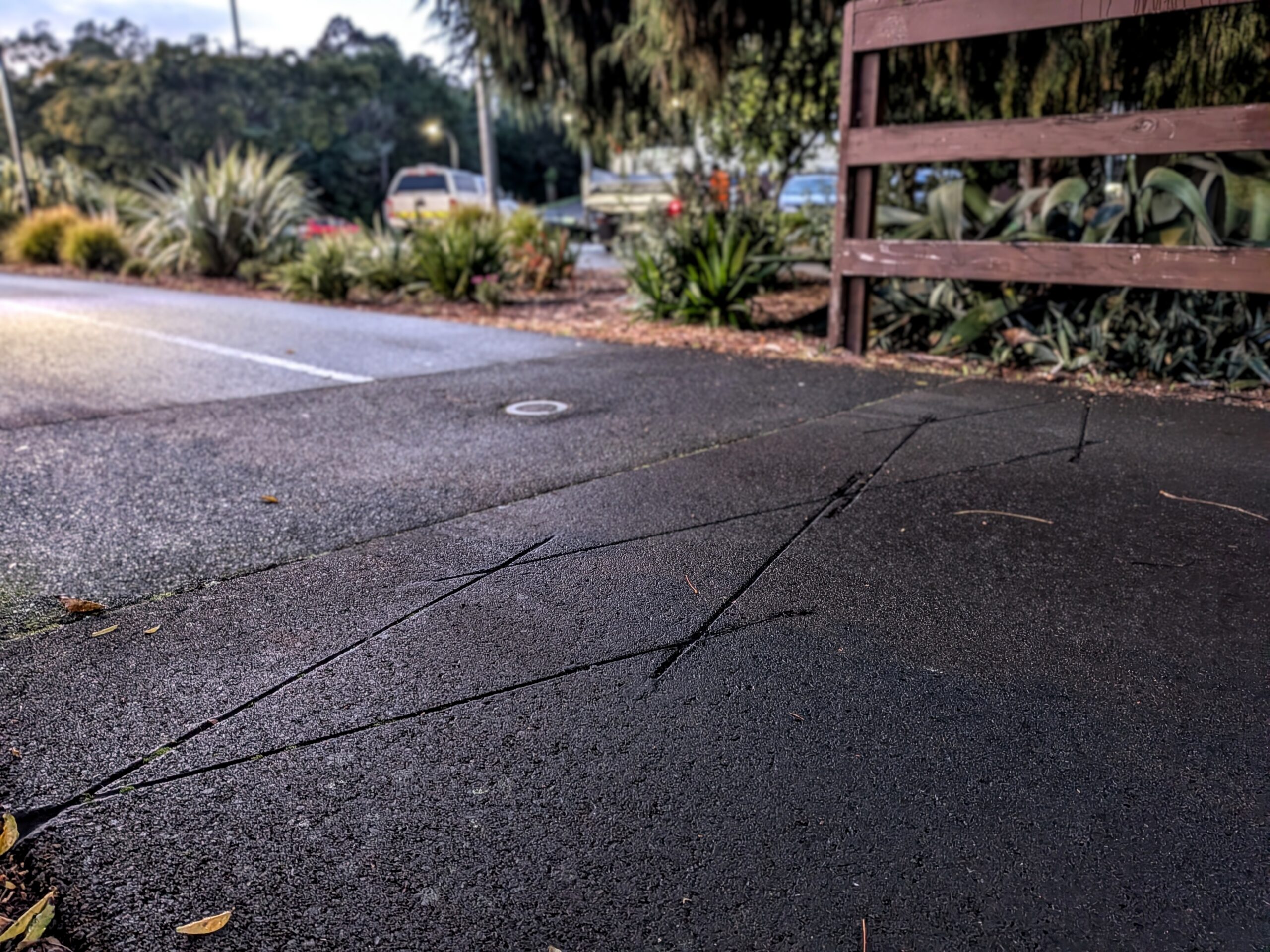
Image: Electromagnetic loop counter on the Northwestern Shared Path in Kingsland.
Auckland Transport has been counting cycle trips consistently since 2010. Back then, it had cycle counters at just 8 sites. Today, there are over 80! Auckland Transport installs more counters on a regular basis as the cycle network grows.
Auckland Transport usually reports on the cycle trips at just 26 of the cycle counters. These are the 26 which have been in place since 2016. Key targets for the region include the counts from the core 26 counters. This means they are the basis for a lot of official reporting. Counts are available for all the counters, however.
Auckland Transport provides cycle count data each month on their website after two weeks, once they validate the data. Tim Welch from the University of Auckland funnels their data into this fabulous dashboard – great to explore.
Several technologies can count bicycles and counters have evolved a lot over the past 10 years. Some use video / AI cameras, some use infrared sensors, some detect metal with electromagnetic loops in the ground, and some detect the pressure of a bike wheel passing over them. As well as accuracy and durability, planners consider things like whether the area will have a mix of different travel modes to detect, whether there is a hard surface in which to embed technology or whether it’s a dirt MTB trail for example, whether it needs to run off solar power or have a long battery life or whether there is easy access to mains power nearby, and, of course, cost.
The most common kind you are likely to see in Auckland in 2026 is the electromagnetic loop type. These can look like a diamond pattern on the ground. Electromagnetic loops also trigger traffic light phases, so you can spot them just before the traffic lights at many intersections. These counters are calibrated to detect either a larger or smaller amount of metal. This means the general traffic lane electromagnetic loop sensors probably won’t detect your bike and trigger a signal change. Pedestrians and scooters aren’t counted by electromagnetic loop counters.
When you see two thin rubber hoses tacked to a road, that’s also a kind of counting sensor. It’s called pneumatic tubes. When a vehicle or bike goes over the tubes, it squeezes them, sending a pulse of air down the hose. A sensor box that logs the strike, including speed and direction of travel. They are portable and cheap, but wear out quickly, so they are better for temporary applications. You may see them being used to understand traffic flow before making an infrastructure change. We’ve also heard they aren’t super accurate for different kinds of micromobility like scooters. And they aren’t suitable for areas where pedestrians walk, like shared paths.
The newest wave of counting tech uses smart cameras. These are incredibly versatile. A single camera can count pedestrians, wheelchairs, bikes, scooters and cars. Being able to count scooters is a key reason why Auckland Transport is replacing 22 of the core 26 counter sites with smart cameras. Smart cameras can pick up more subtle things too. Like if cyclists are riding the wrong way, riding on the footpath or road, or swerving to avoid obstacles. They are more accurate and comprehensive than other sensors. The tech is more expensive and more demanding too – it needs power and internet and a mounting pillar. Auckland Transport is starting to use these more. In some cases Auckland Transport is able to orient existing cameras to pick up the entire carriageway and all modes of transport. AI makes the data processing possible. There is potential for advanced features in the future (e.g., detecting near misses, collecting demographic information etc).
As Auckland relies more on the smart camera for cycle counts, there will be a transitional period of both old and new tech. With the new technology, we expect we’ll know about more of the cycle trips which are happening. We are especially looking forward to having a better understanding of scooter movements.
Cycle counters can feed live into on-street digital displays to show cycleway usage on a given day. We have a few of these around Auckland. Wouldn’t it be great to see more of them, bigger and bolder!
No matter how accurate, cycle counters can only tell us so much. They don’t count a huge number of bike trips on routes without sensors. They don’t tell us who is cycling, and for what purpose – and who isn’t. To me, that’s the most important question of all. Are we making streets for all, or are we leaving people stranded?
Read on for some facts from the bicycle counter data
The new cycle lane on Great North Road has smart camera technology. AT only installed it recently so we don’t have enough data to draw conclusions at this stage. That said, nearby Karangahape Rd is up 32% in April compared to last year. We think that must be a result of the Great North Road cycleway.
The busiest cycle counter points in the city are Quay St, the Northwestern Shared Path in Kingsland, and Tāmaki Drive in Parnell. Te Whau Pathway was the busiest site across the network for the month of May 2026!
Altogether, all the cycle counters counted a whopping 6.44 million bike trips in the past year. As Greater Auckland points out: “it’s important to note that they still won’t pick up every trip (especially local trips to schools/shops that likely won’t pass a cycle counter). And some trips may be picked up on multiple counters (which is also true for almost every driving trip).”
Cycle trips into the city centre have increased significantly since the fuel crisis. They are up 20% year-on-year in April 2026.
Join us
Bike Auckland is the non-profit organisation working to improve things for people on bikes. We’re a people-powered movement for a better region. We speak up for you – and the more of us there are, the stronger our voice!