
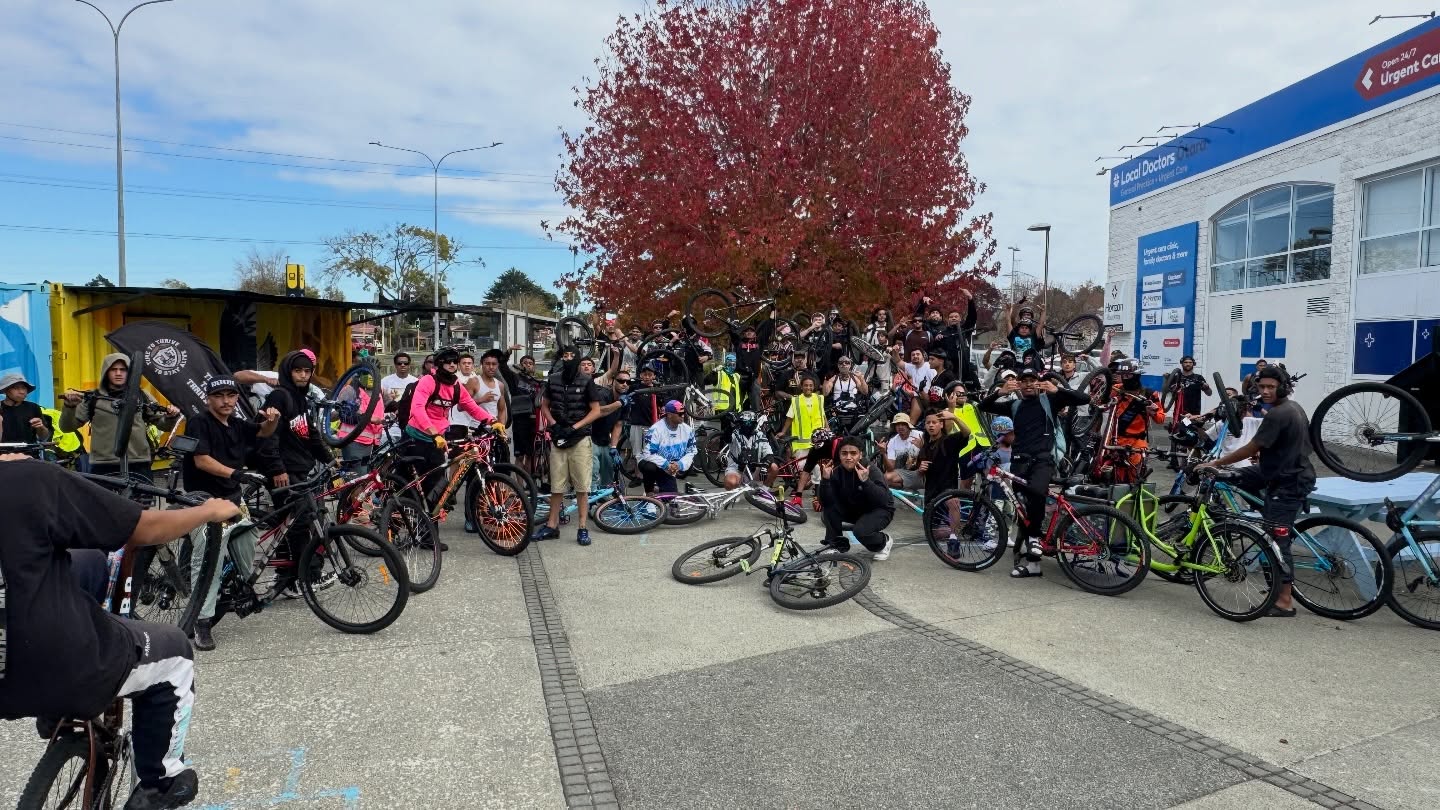
Image: TOUR DE HOODS: STH AKL by @bikelife_collectivenz on Instagram
Bike Auckland’s Deputy Chair Duncan recently reflected on the increasing demands on road and recreation space in Auckland as our population grows. This is not a problem unique to Auckland, nor is it a new problem here.
In their book Ride: The Story of Cycling in New Zealand, the Kennett brothers record complaints about bikes on footpaths and scaring the horses as early as 1887. They note that ‘…pedestrians were calling for cyclists to be banned from footpaths [and] Councils introduced by-laws to stop ‘scorching’ – the practice of cycling fast along city streets.’
In Aotearoa, bicycles have been competing with cars for road space since the early 1900s. As well as speed restrictions, bikes were also required to use a bell and lights. From the 1920s road accidents increased and people on bikes were often the victims. The Kennetts note that in the period 1932-1950 motor vehicles killed 449 people on bikes. Bells, lights and forcing bikes to slow down did not improve their safety.
Fast forward to 2026 and the behaviour of people on bikes is once again in the news and setting off a moral panic. Reportedly, groups on bikes have been harassing people in cars. It’s unclear from the reporting who exactly they are but that hasn’t stopped sternly worded statements from the police being issued to cyclists as a group.
Clearly, those on bikes should not be harassing motorists, or anyone else. But putting that aside, what is playing out is competition for space. Self-motivated groups of people in South Auckland and the Glen Innes area have organised their own bike rides, sometimes with over 100 riders. In South Auckland particularly, there are few cycle lanes, so ipso facto groups of bikes will take road space from cars. The group that rode along Tamaki Drive – a site of ongoing traffic conflict – was subjected to harassment from motorists and racism online.
Aotearoa New Zealand has one of the highest youth suicide rates in the OECD. What is clear from talking to advocates is that cycling is good for young peoples’ mental health, as it is for most of us. Videos of groups often have the hashtag #cardioworkout. These young people are well aware of the health benefits of cycling. Anything that improves young peoples’ mental health should be encouraged.
The fuel crisis has highlighted the need to start moving away from fossil fuels, especially in transport. This also gives us the opportunity to reflect and plan for more bikes on the road resulting from population growth, intensification, and people wanting to improve their health. Like their predecessors of 120 years ago, groups of young people will not stop riding. Nor should they. We need to find ways to ensure they have space and are welcome in the public realm.
Young people are always being told they are the problem. We need to find room for them to be part of the solution.