
As we look in dismay at events unfolding in the Middle East, we are reminded yet again that overseas events can have an impact on our personal lives: the price of food, internet outages and how we choose to travel. Our choice of how we get around on any day is a mix of personal preference and cost. These are, in turn, the product of policy settings, our built environment and – although we often ignore it – global geopolitics.
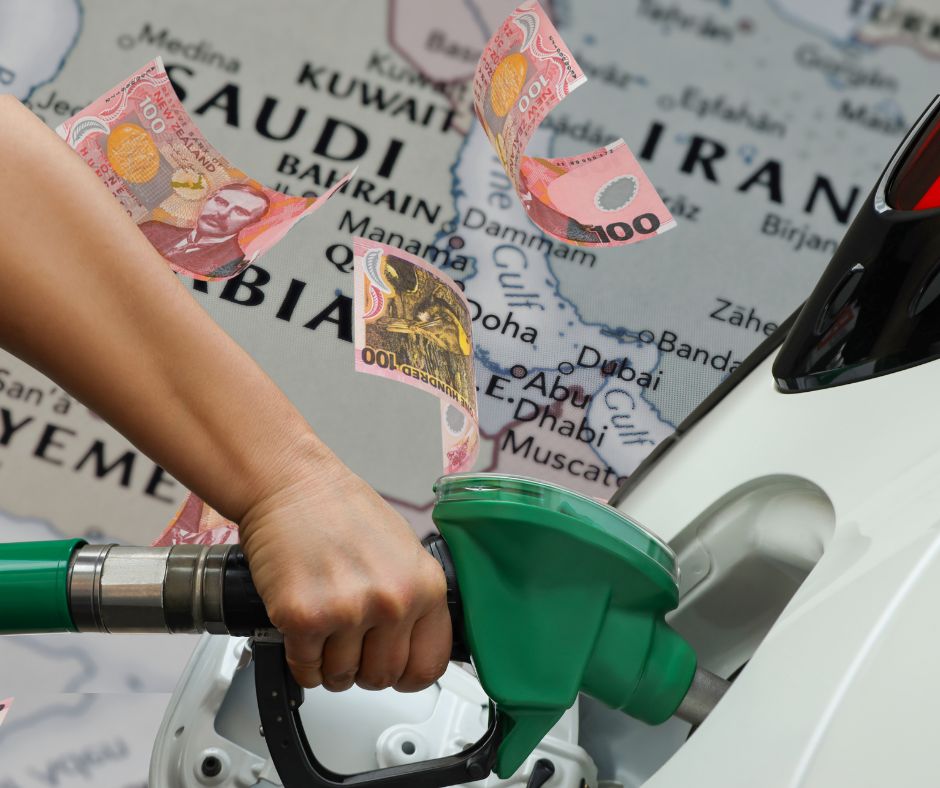
The periodic outbreak of war in the Middle East is one time the private and public world of our transport choices collide, through a phenomenon known as ‘pain at the pump’. At the time of writing Brent crude is $107 per/bbl with an expectation that it will rise further. This means New Zealanders will soon be paying a lot more to fill their gas tanks. In a country in the midst of a severe downturn and with one of the highest rates of car ownership in the OECD, there is a lot of hurt coming down the pipeline.
This will be made worse by the current government’s focus on making Aotearoa New Zealand ever more dependent on fossil fuels. All our fuel is imported. The electric vehicle subsidy has been withdrawn. The Government Policy Statement on transport has slashed funding for cycleways, public transport and even footpaths, and envisages spending many billions on roading. This is essentially locking us into a fossil fuel-dependent future.
New Zealanders need alternatives to car dependence, and they need them urgently. Key to helping New Zealanders’ mobility is being able to travel safely on bikes. Being able to shop, commute, and access services is vital for wellbeing. And we know that protected cycleways are good for local businesses, that they change the way people travel, and make streets safer for everyone.
Bike Auckland is once again calling out the folly of remaining hooked into the global oil network. We urgently need more bike lanes, more public transport, and renewable energy supplies to help de-couple the New Zealand economy from oil price shocks.
The government’s vision of roads and more roads belongs in the 1950s.
It is 2026, a time of global turmoil and accelerating climate change. Time to change track.