

This is an opportunity to tell the Council loud and clear that safe streets and transport options are important to you. You can do this by including your feedback that you want more investment in safe cycleways. If there are any particular projects you especially want to see funded for next financial year, make sure to mention them.
Have your say by Sunday 29 March 2025, 11.59pm.
(This link includes the consultation document.)
Short of time? If you do nothing else, these are the key points to include
In question 4, Other comments on the Annual Plan:
- If you would like to see Council invest in and deliver more fast and affordable safe cycleways, to create a connected cycling network, mention it here.
- Mention any specific projects or routes you’d really like to see completed (see lists below for inspiration!).
- If you support active transport for climate-related reasons, you could mention your support for Auckland meeting its climate change commitments by helping people get around by low-emission transport.
In question 6, City Centre:
- If you would like Queen Street to remain free of cars, including during evenings, mention it here. You could also mention that Queen Street’s Waihorotiu Path was extensively consulted on and approved by the Governing Body, and shouldn’t be changed by the wishes of a minority without consultation. (More detail below.)
What is an Auckland Council Annual Plan, and why should I care?
Auckland Council has plans detailing its planned spending for 1 year (the Annual Plan), 10 years (the Long Term Plan) and 30 years. Usually, the 1 year Annual Plan is created from the budget priorities identified in the Long Term Plan. These plans sit alongside (and should be consistent with) other plans such as Te Tāruke-ā-Tawhiri: Auckland’s Climate Plan.
The next Annual Plan, also known as the annual budget, covers the period from 1 July 2026 to 30 June 2027.
Council must give Aucklanders an opportunity to give feedback on its Annual Plan, and it reports back on the feedback it receives.
The 2026/2027 Annual Plan covers the period when Auckland Transport will be transformed and walking and cycling projects are expected to move to Local Boards. Therefore, it’s especially important to let Council and Local Boards know what you need from them in order to be able to get around safely by bike.
For people who ride bikes, it’s a good opportunity to let Council know how many of us want to be able to get around safely by bike, and how important it is that Auckland improves its bike infrastructure.
Why Council needs to hear from Aucklanders about the importance of keeping cars off Queen Street
There is a push by some Queen Street businesses to remove the cycle lanes on Queen Street and replace them with traffic lanes.
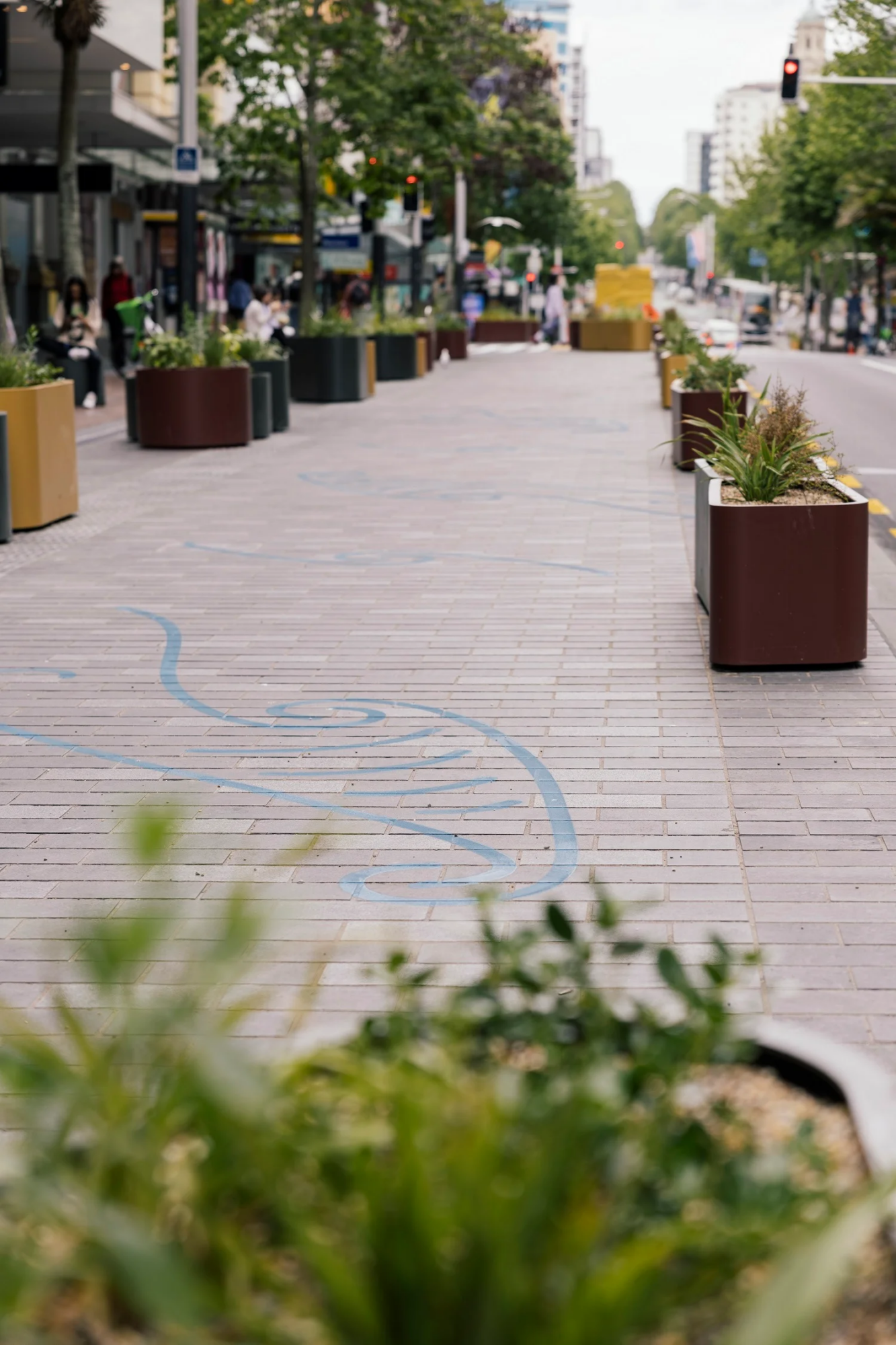
The Council and AT need to be reminded that the Queen Street lanes were extensively consulted on and approved by the Governing Body.
Reasons to keep the Queen Street car-free include:
- The Queen Street cycle path is the only safe cycling route in the city centre and is the only north-south route. Bringing back traffic and parking will make the central city less safe for everyone. It will slow down buses, making sustainable transport less practical for people.
- The removal of the cycleway and replacing it with another two lanes of traffic and parking would also result in many months of disruption, which central city shopkeepers have been very vocal in saying they do not want.
- Replacing lanes would also be expensive at a time when the Council is trying to keep costs down.
- Areas which have been pedestrianised have seen an increase in profits for the businesses on those streets.
- The Auckland City Centre Master Plan envisages Auckland’s city centre as Auckland’s ‘cultural, civic, retail and economic heart.’ Other cities have recognised that this is incompatible with multiple lanes of traffic belching out fumes, and the Auckland Council must recognise this, too.
Add any other reasons you can think to bolster your case.
These cycling-related projects ARE included in the Annual Plan
Major Projects you can comment on, including some transport projects, are listed on pages 10-11 of the Consultation Document. (More on how to include these in your feedback below.)
Ones which directly relate to getting around by bike include:
- Progressing the Eastern Busway and associated cycle lanes.
- City Rail Link and associated improvements to active transport amenities.
- Carrington Road improvements including cycleways.
- Continued focus on intensification including implementation of Plan Change 120.
- Progressing city centre regeneration programmes. These include completion of public spaces around CRL stations and Te Hā Noa – Victoria Street, and further development of High Streets and Te Toangaroa in line with the City Centre Master Plan. This includes retaining and adding to existing active transport amenities.
These cycling projects aren’t mentioned in the Annual Plan, but should be
(More on how to include these in your feedback below.)
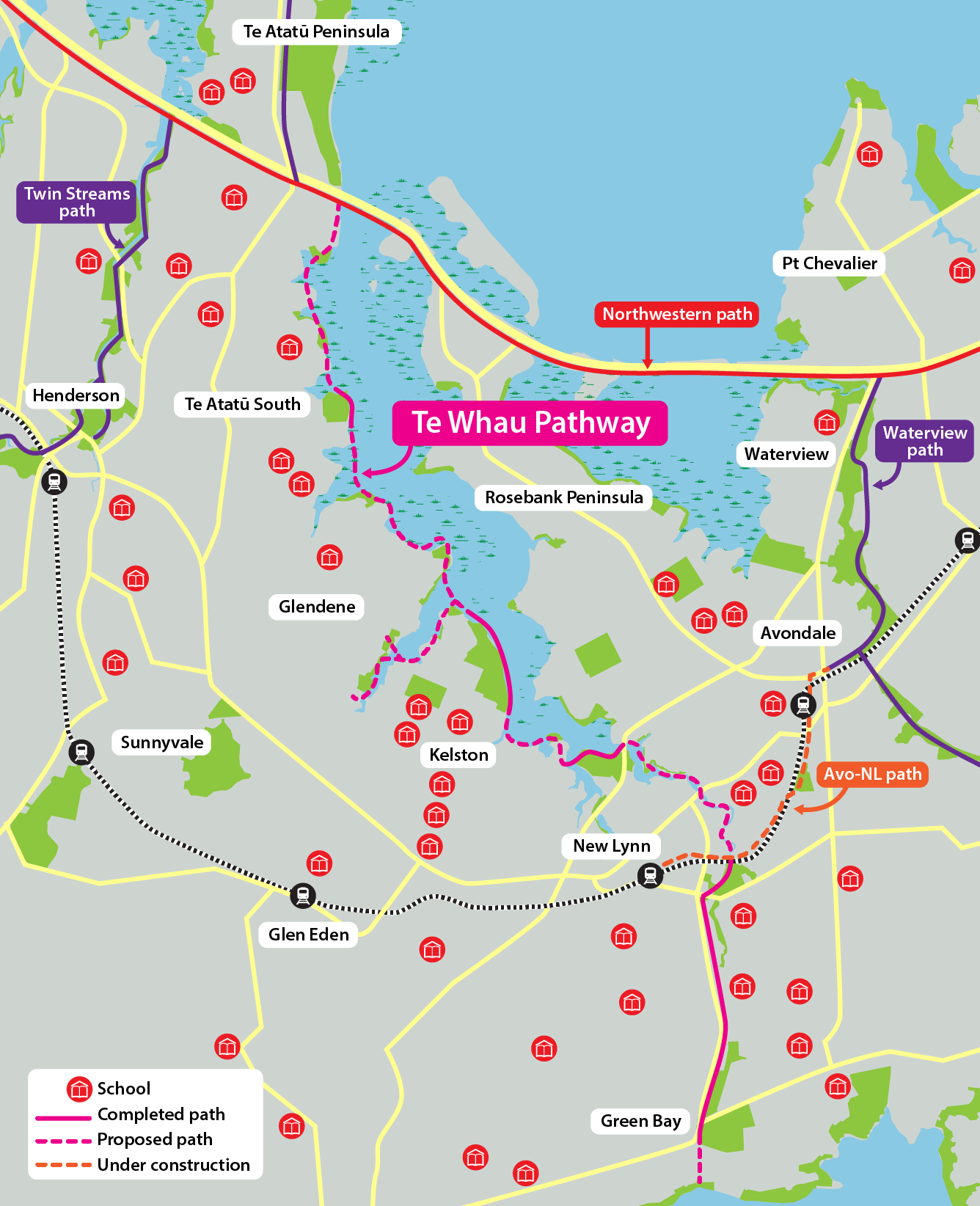

(Photo by Tim Duhamel)
- Te Whau Pathway – the next boardwalk section between the completed Horowai Connection (NW Path to Roberts Field) south to McLeod Park. Because of the specialist skills and machinery involved in carefully constructing Te Whau Pathway over delicate ecosystems, it’s vital the project has funds to continue in the coming financial year. A pause in funding could really damage the chances of completion – and thereby all the benefits this north-south connection will bring.
- If you’re in the Henderson-Massey Local Board area, you could mention this in your feedback in question 3 on the local board plan, where it is not currently mentioned.
- Green Lane West. This arterial is getting an upgrade, but needs funds from Council to make sure it meets safety standards. It’s a critical gap in the map and we want to know Council has it covered.
- If you’re in the Albert-Eden or Maungakiekie-Tāmaki Local Board area, you can also mention it in question 3 about local board plans. It is not currently mentioned in these local board plans.
- Great North Road / the Inner West remaining gaps. Auckland Transport has done so much to connect the Inner West with safe cycleways, but there remain glaring gaps. These include the section of Great North Road from where the new cycleway currently ends down to Western Springs Park.
- If you’re in the Waitematā Local Board area, you could include this in your feedback in Q3 on their plan, where it is not currently mentioned.
- Māngere East and Manukau Preferred Cycling Networks. Māngere West cycling network is coming together beautifully, connecting us to the airport (after a long advocacy fight). Now let’s join up the dots. Let Council know these two projects are needed by the community.
- If you’re in the Ōtara-Papatoetoe and Māngere -Ōtāhuhu Local Boards, you could mention these projects in question 3 on local board plans, where they are not currently mentioned.
- Cycleways connecting into the Northern Corridor. Some of these are further along than others. It would be great to voice your support in particular for those which are less advanced, such as Constellation Dr and Greville Rd.
- If you’re in the Hibiscus and Bays Local Board areas, you could mention your support for all projects which extend the safe cycling network from the Northern Corridor in question 3 on Local Board priorities.
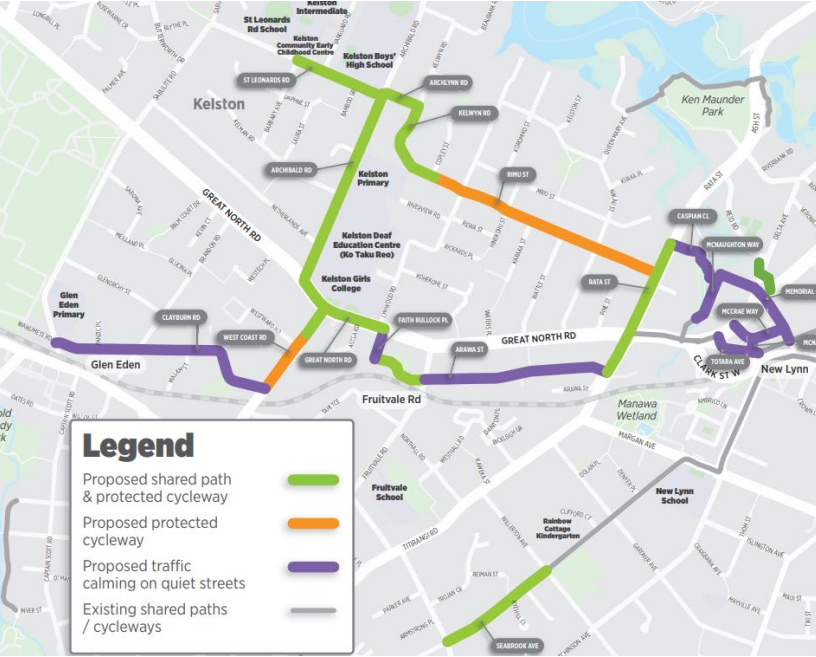
- Kelston-New Lynn (and Glen Eden) cycling network. This project puts so many schools on safe cycling routes. Let Council know you want to see it completed.
- If you’re in the Whau or Waitakere Ranges Local Board areas, you could also mention your support for this project in question 3 on Local Board priorities.
- The Gowing Drive connection, which connects Te Ara Ki Uta Ki Tai across the train line to Gowing Drive and local schools. This is the final stage of the Meadowbank to Kohimarama Connections project and it has strong community support. But this critical link is on hold due to lack of central government funding for walking and cycling projects. Council needs a plan for how to fund the project.
- If you’re in the Ōrākei Local Board area, you could mention this in question 3 on the local board plan.
Tips on how to approach your submission
Have your say by Sunday 29 March 2025, 11.59pm.
It is important to tell the Council what you would like to see in your own words. Be firm but polite – your submission is more likely to be taken seriously if you are courteous.
In the comments sections it’s helpful to tell your personal “why”: why does it matter to you? Talking about why it matters to you can be powerful in helping elected representatives to understand your point of view.
If you don’t have much time
All questions are optional – you only have to answer the parts you’re interested in. It’s okay to leave some parts blank – it’s better than not submitting at all. Question 4 is the best question for sharing what you need in terms of cycling.
If you have more time…
Have a look at what your local board has planned. Let them know you support safe cycle connections, pump tracks, and other cycle facilities for your area. You may also want to voice support for investment in community-led activities such as climate action programmes, modeshift initiatives, and bike hubs.
You can also give feedback for other local board areas which you frequently visit. This could include where your workplace is.
Find information about what your local board intends to invest in for 2026/2027 in the Supporting Information Document.
The feedback form step by step
While we recommend you write your submission in your own words and make sure to include what you care about most, we’ve provided some prompts below to help get you started. Please note that our focus is on transport. You could look at other submission guides to get ideas about other areas that this Annual Plan will affect.
There are 6 question areas.
Question 1: Our overall plan and proposed increases to rates: what do you think of the proposed annual plan? Why?
Page 8-9 of the Consultation Document gives an overview of the Annual Plan which may be helpful in answering this question.
This is a good place to mention the cycling-related projects which are in the Annual Plan (jump to list), and mention that you particularly want to see the cycling elements mentioned above.
Question 2: Changes to other rates, fees and charges.
This includes a question about how street space is used with a proposal to increase residential parking permit fees. Bike Auckland supports the increase in fees and believes that street space could be better used for active and public transport. Streets are also safer with fewer parked cars.
Question 3: Local board priorities. These questions are specific to your Local Board.
Local Boards are facing funding shortfalls this year, and it is likely that local services will be cut. If you want your Local Board to continue to fund cycling amenities you will need to submit on the Local Board plans. These are covered on pages 15-29 of the consultation document.
Some Local Board areas have questions relating directly or indirectly to cycling, for example, planning housing intensification closer to the city centre and transport hubs enables people to choose bike.
Question 4: Do you have any other comments on the Annual Plan 2026/2027?
This is the place to mention the cycling projects which aren’t in the plan but which you’d like to see – see our list above for inspiration.
We recommend you give broad feedback, and include a personal story about why it matters to you (e.g., “I want my kids to have a safe route to cycle to school so I don’t have to be their taxi, and so that they get more physical activity into their days”).
Here are some ideas for what might be important to you regarding this budget.
“I want Auckland Council to… “
- Invest in and deliver more fast and affordable safe cycleways (e.g., pop up bike lanes) and convenient public transport (e.g., bus priority lanes). This can be done fast by reallocating road space (parking or extra lanes) and “building back better” during road renewals. They give all people safe options for getting around by any transport mode.
- Invest in and deliver **insert the projects you want to see delivered here**
See our list of the ones we think should be mentioned (jump to list). - Jointly with the central government, ensuring 10- and 30-year transport plans include funding for cycling amenities in order to meet the Council’s and Aotearoa New Zealand’s climate change commitments and create a healthier urban environment for all Aucklanders.
- Ensure any money saved on cycling projects is reinvested into other cycling projects.
- Invest in and progress the City Centre Master Plan which includes improvements for walking, cycling, and accessibility in the city centre – including retaining the safe cycleway the length of Victoria St and keeping cars off Queen St.
- Invest in walking and cycling over-bridges / safe tunnels to replace level crossings.
- Invest in more bike skills courses across the region, so that more people can experience the joy and freedom of riding a bike – and to support more people to ride from A to B for their transport, reducing our emissions.
- Invest more towards safe streets and delivering Vision Zero, including raised crossings, and traffic calming.
- Invest more into climate action-related programmes such as Te Ara Urutau – Climate and Emergency Ready Fund, encouraging more people to cycle, walk, and take public transport.
- Invest in convenient and regular public transport, including provision of secure bike parking and safe cycleway connections at public transport hubs. For some people using public transport and cycling together as a combo is crucial for their trips.
- Provide access for bikes on buses (on board the buses or racks on the front or back of buses). For some people using public transport and cycling together as a combo is crucial for their trips.
Share positive feedback
It’s also a great opportunity to celebrate what has been delivered over the past year, and to give the Council positive feedback on what you have enjoyed and what you’re looking forward to (ideas here!).
Question 5: Looking further ahead / shaping Auckland’s longer-term future: Rank which areas are most important to you over the long term.
After giving your rank to the various areas, including transport, there’s an opportunity to specify what specific council activities or services do you most want us to prioritise, and why. You could mention what you’d like to see in terms of safe active transport.
Question 6: What improvements do you think we should prioritise in the city centre?
There’s an option you could tick called “Getting around” but as well as cycling, it also talks about making it easier to drive in the city centre. We think private cars need to be minimised in the city centre to make space for more efficient transport like buses, trains, bikes and walking. If you agree, click Other instead and tell Council that.
This is the place to mention that you support keeping cars off Queen Street at all times – for all the reasons mentioned above.
How to have your say on the Auckland Council Annual Plan
Have your say by Sunday 29 March 2025, 11.59pm.
To make a submission:
- You can provide feedback via the online form.
- Complete the feedback form included in the Annual Plan Consultation Document then either scan and email it back, or post it, or drop it off at a library.
- You can get a copy of the Annual Plan and the feedback form at your local library or Local Board office. Complete the form and return it as above.
- Libraries are hosting low sensory drop-in sessions. They are quieter sessions in rooms with low lighting where you can complete your feedback at your own pace with support and information from staff where needed.
- If you represent an organisation or group, you can apply for a ‘speaking slot’ to present your feedback.
How to find out more about the Annual Plan and ask questions
The Consultation Document
The Consultation Document is a summary of the Annual Plan, covering the Council’s planned major projects and spending.
There is also a Supporting Information document which includes information specific to each Local Board, plus other information about proposed changes to charges for Aucklanders, and a summary of the operational plan for the Tūpuna Maunga Authority. If you want to contact your Local Board directly, email addresses can be found here.
Face-to-face
Face-to-face events will take place across the region where you can provide feedback in person. These are also a great way to meet with Local Board members. The details of these events will be published on the website at akhaveyoursay.nz/ourplan or you can call for more information on 09 301 0101.
Webinars
The Council is holding online webinars, where subject-matter experts will be discussing and providing information on the annual plan. You will have an opportunity to listen and ask questions.
For more information and to register for these webinars go online to akhaveyoursay.nz/ourplan..
Have your say by Sunday 29 March 2025, 11.59pm.